Link Building for Fitness Businesses: Improve Your Site Authority
Here’s a graph from ahrefs showing a fitness website’s organic traffic growth. You can see that as the number of referring domains grows (blue line), so does their organic traffic (orange line).
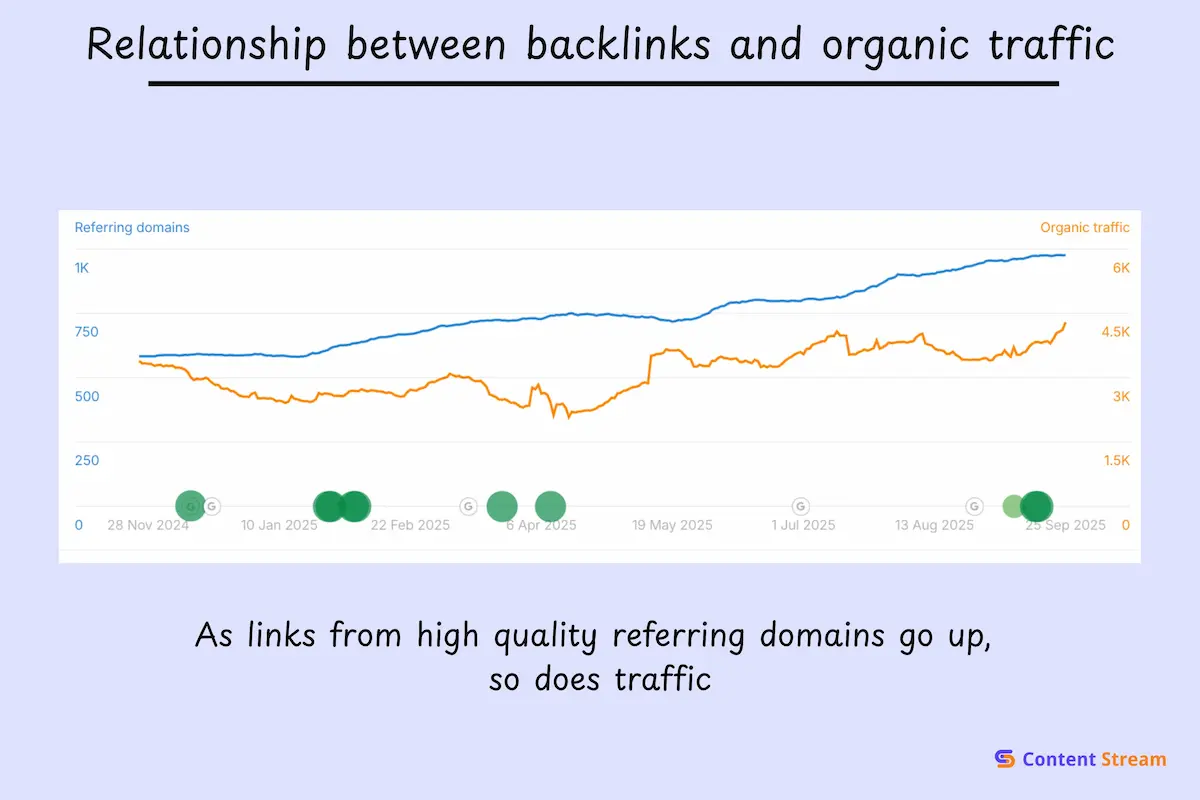
There are other factors that influence organic traffic: quality of content, topical authority, on-page seo optimizations, overall SEO landscape, and much more. But, backlinks are critical, and the graph shows a clear correlation with traffic.
We’ve seen this happen over and over. It’s why the top ranking results on Google have 3.8 times as many backlinks as others, and why some businesses spend over $15,000 monthly on backlink campaigns!
However, link building doesn’t traditionally work the same with fitness businesses as with other businesses. That’s because fitness can be both local and competitive at the same time. (we’ll get more into that later.)
So let’s look a little closer. If you run a gym chain, boutique studio, martial arts school, studio, supplement store, or even sell workout equipment, this guide is for you. We’ll cover why your fitness business needs link building, and the most effective strategies that work.
A lot of link building strategies treat all industries the same. But fitness sits at an intersection that changes everything: local intent meets national competition, and trust matters more than almost any other industry.
Here’s what makes fitness different:
Take gyms and studios. They need really hyper-local signals; your zip code matters more than a backlink from a national publication
But, ecommerce fitness brands (supplements, equipment) compete in crowded national markets where generic tactics get drowned out and local SEO doesn’t help much.
Some businesses also exist in both worlds (think franchise gyms with online stores or personal trainers with local clients and digital programs).
People research fitness businesses differently than they’d research a restaurant or clothing store. As a result, Google evaluates fitness content under “Your Money or Your Life” standards and links from health authorities carry serious weight.
Read more about Google’s YMYL standards in its Search Quality Rater Guidelines.
If you’re relying on social proof like transformations, your claims will also need credibility. So unsurprisingly, a link from something like a local hospital’s wellness program will mean more than ten links from random blogs about marketing.
These differences mean you can’t just copy what works for law firms or SaaS companies. You need strategies built specifically for how fitness businesses operate, and how people find them.
So let’s talk about that next. What strategies work best for each type of fitness business?
For gyms, studios, martial arts schools, and yoga studios, local link building is one of the most important things you can do for your business.
Why?
Well because the right local backlinks improve rankings, boost traffic (as we see in the chart), and signal to Google and your community that you’re trustworthy.
Here are a few strategies you can use to make that happen.
Think youth sports teams, charity runs, or school wellness programs. These initiatives can be really helpful for backlinking. Every time your name appears on a school website or community portal, Google treats it as a vote of trust. There’s a bonus too! Your brand will gain real-world recognition.
There are many ways to do partnerships like these, and they don’t have to be for just the backlinks.
You could support a local wellness workshop, offer free classes at a school health fair, or even team up with a charity. All of these can earn your business multiple mentions and links in the press, newsletters, and websites, building authority and goodwill simultaneously.
Local journalists are always hunting for stories that resonate with their audience. When building links for online businesses, our team tends to use platforms like HARO and Qwoted.
But since you run a local business, consider pitching your unique classes, most impressive member transformations, or community involvement to journalists in the area. Even a small feature can go a long way, while introducing your business to potential clients.
But more importantly, backlinks from these sources (even if they are no-follow) can boost your website’s authority.
Here are some angles you can use to pitch your fitness business to local reporters:
Links from reputable local directories can confirm your business exists, improve your visibility for people searching, and boost your domain authority.
You can quickly use tools like Prepostseo to see their authority and spam score. You want a high domain authority and low spam score for maximum boost to your own site.
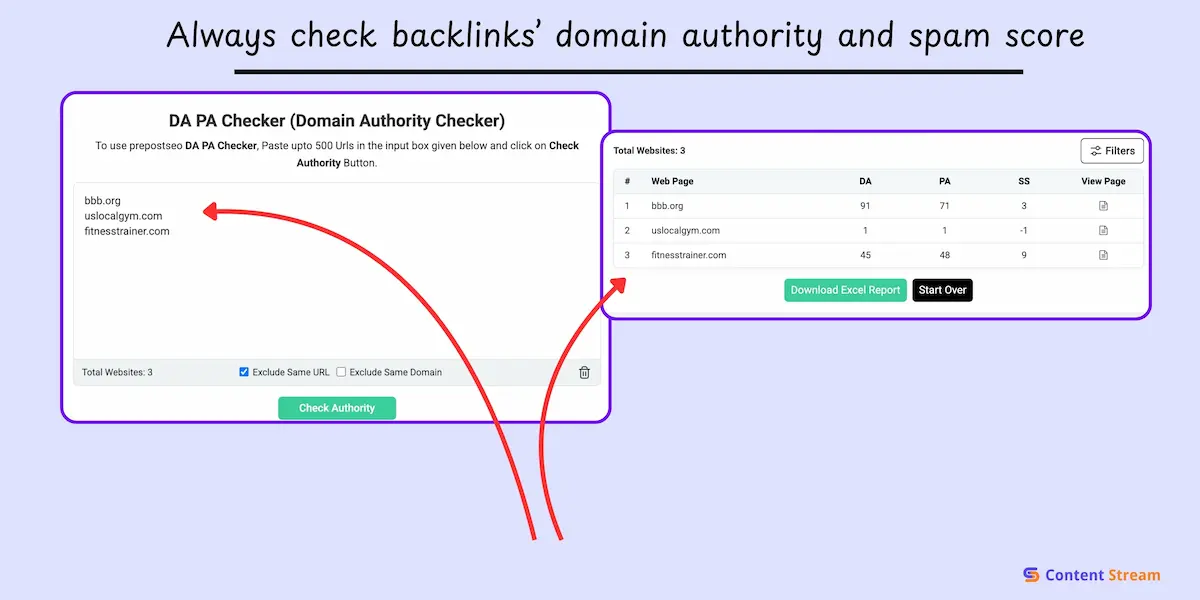
But don’t take these numbers as a hard rule because even small directories can help if they are widely trusted in your city or niche.
Physical therapists, nutritionists, and wellness coaches are businesses that can compliment yours very nicely. Cross-promotions featuring each other on websites or hosting joint workshops can help generate high-value backlinks.
The boost might not be huge if you both have low domain authority, but this kind of synergy from other local businesses is a great signal. Google has stated that prominence (how many local sources link to you) is an important factor in how they determine local results.
Note: Remember that local citations and community links are stronger when the Google Business Profile is also accurate and active.
If you sell supplements, gear, or apparel, your approach has to shift from trying to gain local links. Here, true growth will come from earning national or niche authority links.
Here are some of the most effective approaches we’ve seen:

Pitch your products to sites publishing “best of” content. Things like “Best Pre-Workout Supplements” or “Top Home Gym Equipment.”
Depending on their content standards, see if you can add images, highlight benefits, and show why your product deserves inclusion.
Besides the backlink juice, Google’s AIO and LLMs favor product roundups like these because of their structured format, comprehensive information, and the authority the sites have built up. All these can work for you if you’re able to land the listings.
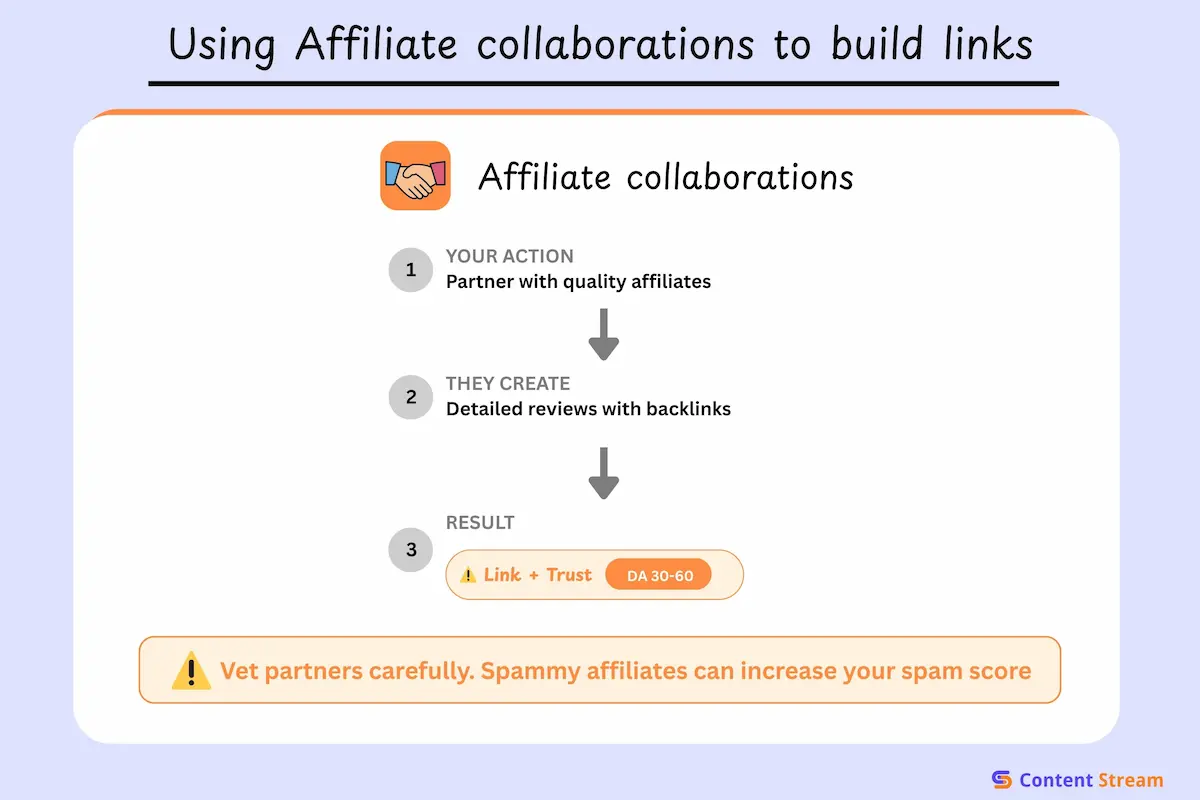
When affiliates write detailed reviews or include your products in top lists, you get a backlink plus extra trust.
This strategy is dicey, however, since affiliate websites aren’t what they used to be. For one, Google has gradually deranked purely affiliate websites. Also, many of them tend to build spammy links, and can pollute your website’s backlink profile.
Use this strategy cautiously.
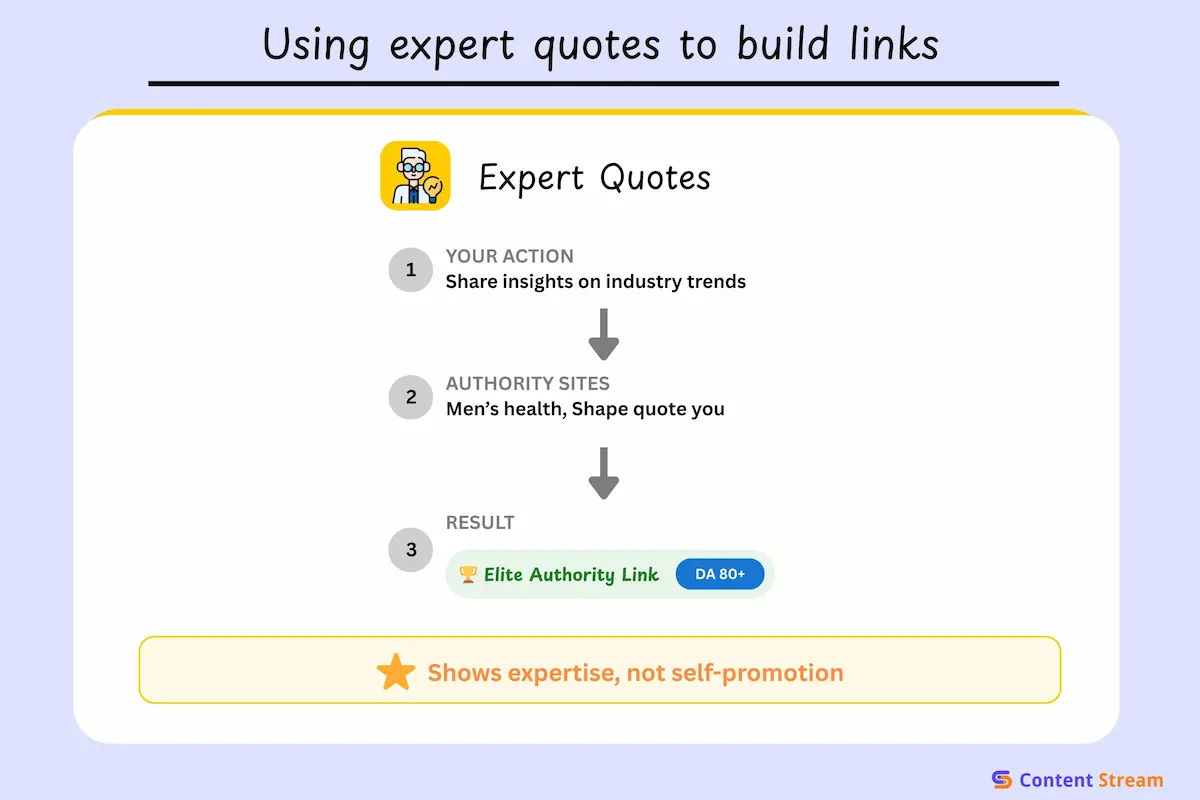
Position yourself as the go-to voice in your niche. Share your insights on your blog, publish on high-authority forums, or even pitch your thoughts to websites like Men’s Health and Shape. These mentions carry real weight because they show authority, not self-promotion.
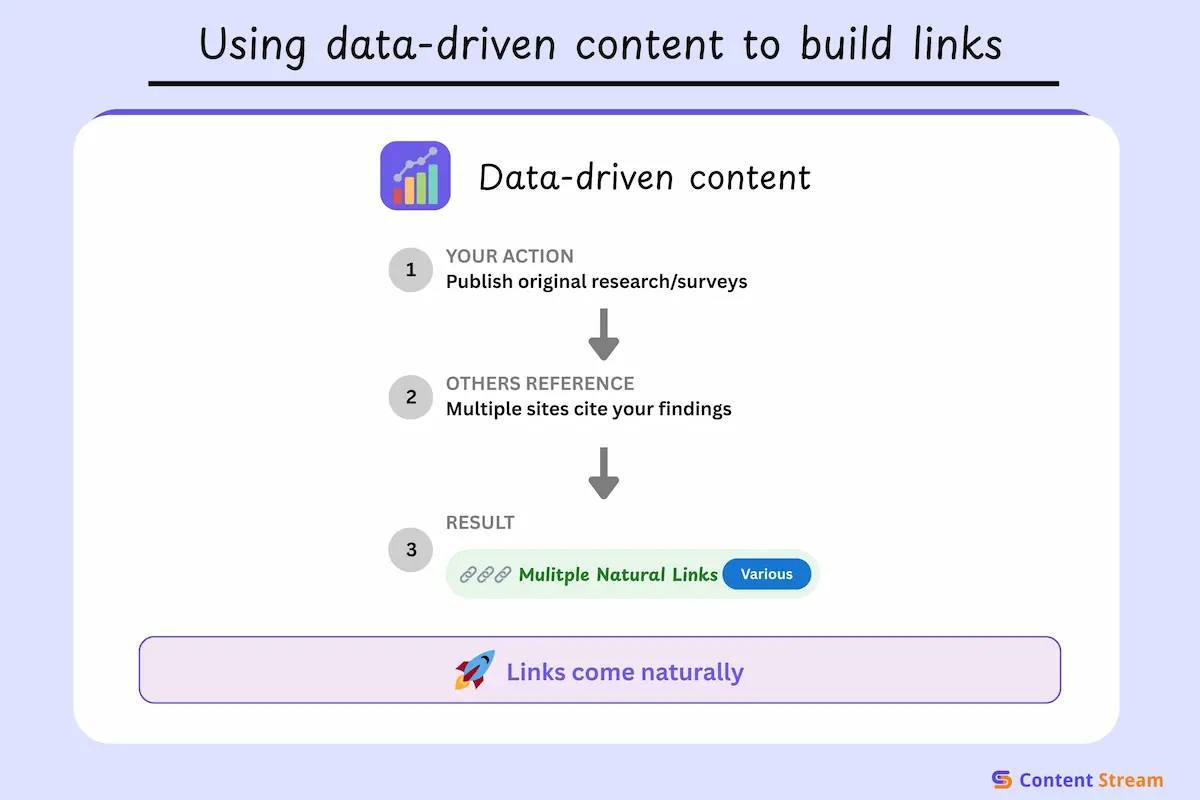
Original research attracts links naturally, whether that’s statistics you noticed in your business, collated feedback, or even a roundup of relevant stats in your industry.
But you don’t have to launch extensive research to publish data-driven content. Run surveys, track trends, and analyze results. Other sites will reference your findings and link back without any extra effort on your part.
No matter what kind of fitness business you run, content remains one of your strongest link-building tools. And not content just for the sake of it. I mean content that people want to share, bookmark, reference, and link to because it actually helps them.
Here’s how fitness brands can use content to earn backlinks naturally.
Fitness is full of trends: home workouts, macros, cold plunges, form mistakes, recovery routines; these are all really helpful ways you can share information with your audience.
You can decide to run your own survey and gather your own data, or, even aggregate useful information into one unified database that people can refer to (similar to what we’ve done in this article).
The result will be:
This one works beautifully in fitness because trainers, nutritionists, physiotherapists, and coaches are often always happy to be featured as experts. And as a bonus, some of them tend to share the resource with their audience as well.
Try to find experts who align with your business’ message, and be sure to feature their names and credentials prominently in your blog so people know it’s coming from an authority.
Not every fitness business can build a full app, but simple calculators are way more helpful than you would expect.
Now, basic tools like Macro calculators and Rep max calculators are already a dime a dozen. But, if they will truly be helpful for your audience, you can add them to your website. Also consider making tools that are unique to what you offer.
For example, you could make a “Personalized Workout Time Finder” that recommends the best time of day for users to workout based on circadian rhythm research. You could even create the option for individual inputs like daily schedule, work hours, sleep window, etc.
Tools like these can earn consistent backlinks over time because bloggers, clubs, and training programs embed or reference them for convenience. People love tools that make their lives easier. And when something is genuinely useful, the backlinks come naturally and steadily.
If you can create clean and appealing visuals that break down complicated topics, it could be a consistent long-term source of backlinks for your business.
Think:
Guest posting is one of the oldest, classic ways to earn backlinks and it still works today. Some websites may request payment in return, while others are simply glad for the content.
Be sure to pitch topics that speak to your expertise and solve a real problem. Some ideas include:
Write something genuinely helpful, and fitness publishers will gladly link back to your site as your source.
Fitness link building isn’t one-size-fits-all. We’ve seen that businesses like gyms, studios, martial arts schools, and yoga centers thrive on community-focused links. On the other hand, ecommerce brands grow through national authority, expert citations, and shareable content.
Thing is, across all types, the winning formula is the same: relationships and real value.
But link building can only take your business so far. If your website isn’t set up properly, you may not see significant growth in your organic traffic, even if you earn links from huge websites like Men’s Health and Wikipedia.
Request a free site audit today and see how well your site is set up for SEO success.
Fitness businesses need link building because backlinks directly correlate with organic traffic growth and search rankings, with top-ranking results having 3.8 times more backlinks than lower-ranking pages. Quality backlinks signal trust and authority to Google, which is especially critical for fitness businesses since they fall under “Your Money or Your Life” (YMYL) standards.
The most effective link building approach depends on your business type: local fitness businesses (gyms, studios, martial arts schools) should prioritize community partnerships, local sponsorships, and regional media features. Ecommerce fitness brands benefit more from product roundups, expert commentary in national publications, and data-driven content.
A conservative budget for a smaller business would be about $500 a month. But note that link building costs for fitness businesses vary widely based on strategy and scale, and some large businesses spend over $15,000 monthly on comprehensive backlink campaigns while others invest minimally through organic tactics like local partnerships and content creation.

I’m Matthew, a personal trainer turned SEO who’s worked with brands like Gymfluencers, Sailo, ClickCease, and Fraud Blocker. These days, I help small to medium sized companies grow their reach with smart, search-focused content.
