The Fitness Equipment Marketing Plan Global Brands Use
The global fitness equipment market is a $36.37 billion industry, expected to reach $ 47.78 billion by 2030,
And as the market trends upwards, people are buying more home and gym fitness equipment than ever before. But just because the market is booming doesn’t mean EVERY fitness equipment business will be wildly successful.
Competition is stiff, and buyers love to do their research before committing.
That’s why it only makes sense to invest in your customer’s journey and help them see why your product is the right choice for them. That’s why we created this guide.
So whether you sell fitness equipment in retail, ecommerce, or as a wholesaler, read on for a breakdown of the strategies that popular brands use to reach prospective buyers.
There are many ways to break down fitness equipment buyers, especially if your business addresses a wide range of customers. But here, we’ll be looking at individual buyers and commercial buyers.
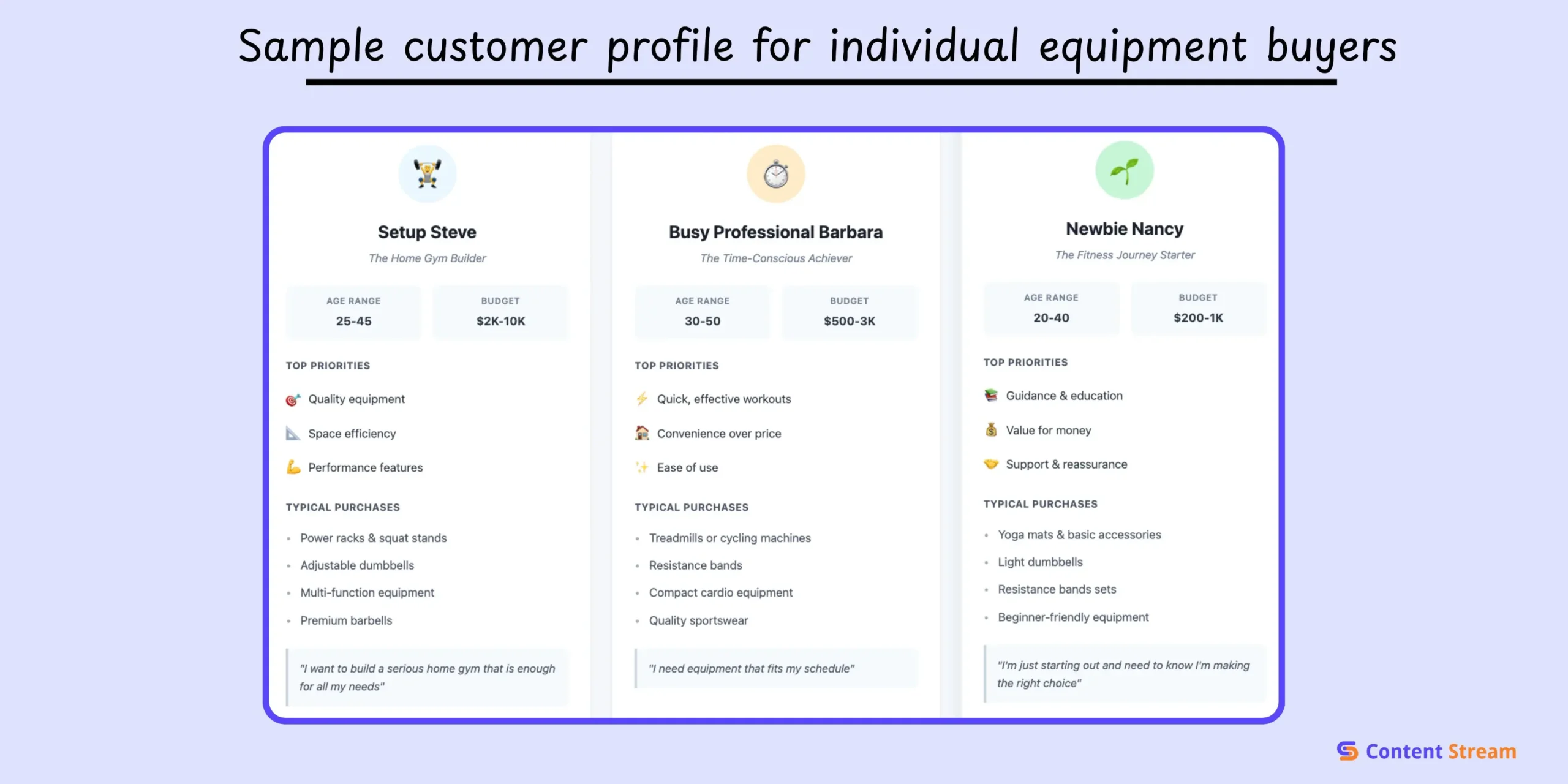
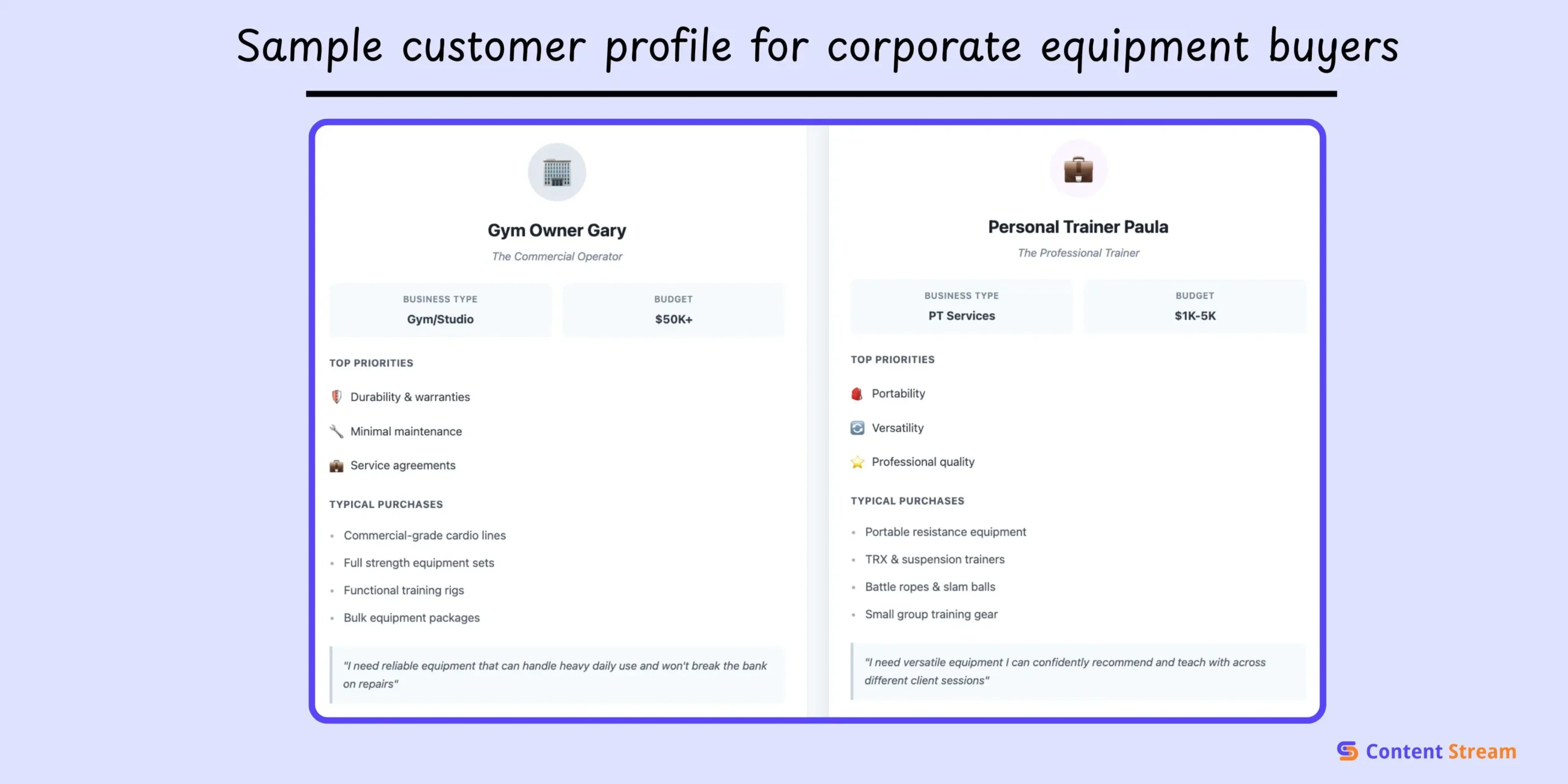
Personas matter because they allow you to tailor every blog, social post, email, ad, and product design decision to the specific demographic you’re looking to sell to.
Now that we have a clear picture of your potential personals, let’s break down the strategies you can use. Here we’ll cover
Over 59% of all marketers report that content marketing was somewhat effective in achieving their business goals, and email marketing alone can net you up to $36 ROI for every dollar spent.
When done right, Content marketing speaks to your buyers’ biggest concerns, provides genuinely helpful information, and naturally introduces your product as a long-term solution.
Editor’s note: Before we jump into more content marketing angles you can try, it’s extremely important to build topical authority for your website first. That means providing content that’s genuinely helpful to readers.
This is even more important in today’s world of Answer Engine Optimization where most people turn to LLMs like Google’s Gemini or ChatGPT for answers. These sources won’t cite and recommend your website unless you’re an authority. And that means providing unbiased answers, not just hyping your products in every blog.
Here are four content marketing ideas for fitness equipment businesses:
PS, we have a list of 1000+ fitness and gym related keywords your business can target.
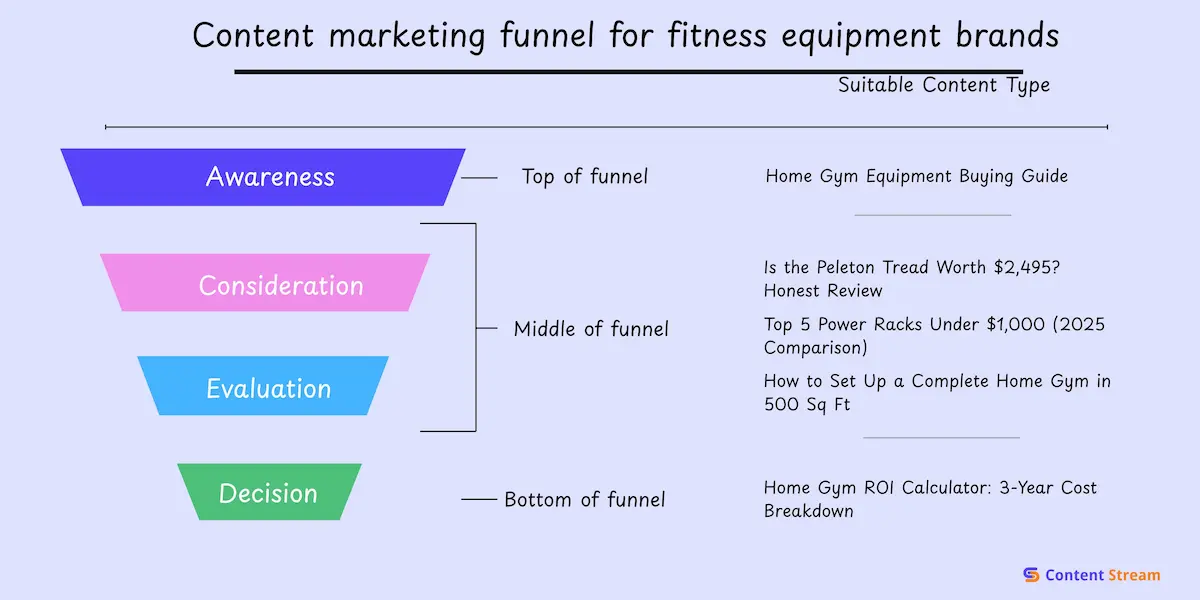
Buying guides help buyers still in the research phase, and they target Top-of-Funnel customers.
So, your guide should meet them where they are, which includes highlighting the important attributes to look for, multiple product options and a recommendation, and of course, helpful pricing reference.
Buying guides work so well because they meet a genuine need and give you a chance to create awareness with customers just starting to research.
Product comparison content is a natural follow-up to buying guides. Readers want to see how the top products stack up against each other, and your content can help..
They highlight features by use case, break down the best options for the price, and give shoppers the clarity they need to choose confidently. It’s important to be honest here. If your product is only best for one use case, clearly state that.
I’ve seen websites hyping their equipment when there are obvious better options out there, and it doesn’t work. Your readers will compare your thoughts with other sources out there and quickly figure out the real source of truth.
How-to content speaks to buyers who are nearly ready to commit but need reassurance that your equipment is easy to use and fits their routine.
When we create this kind of content at Content Stream, our goal is to show the reader what ownership looks like with a realistic guide on setup, safe and proper exercise, maintenance, and space planning.
By the end, they should feel confident that they know exactly what to expect, and what the uses cases are.
Bottom-of-funnel content exists to clear up any last doubts and help buyers justify their purchase. You should include tools like ROI calculators to show home and gym owners how much value they can get from their purchases in the long term
Also, break down financial options, warranties, and service plans in plain language so nothing feels risky. And pair this with real customer success stories and measurable results. At this stage, clarity and reassurance are what ultimately drive conversions.
For a deeper dive on how to use content marketing see our article: Successful fitness advertising ideas you can copy right now.
Fitness equipment is a high-consideration, expensive purchase, and buyers want to see exactly what they’re getting before committing.
You can use videos to give researchers visual proof, as well as setup steps, usage scenarios (building on written content,) and even performance.
Here are some video types you should consider doing:
Show the full unboxing and setup process. Walk viewers through assembly, demonstrate how the machine looks in different spaces, and highlight key features in action. Setup Steve needs to know what he’s getting into before that delivery truck arrives.
Create tutorials showing proper form and different exercises possible on your equipment. Think “10 exercises you can do on the [your cable machine]” or “Full-body workout using only [your adjustable dumbbells].”
Film your equipment in real home gyms, apartments, or garage setups. Show it from multiple angles with measurements. This will be great for buyers working with smaller spaces, or who plan to buy multiple equipment needs to know it’ll fit in her spare bedroom.
Chop longer videos into 15-60 second clips for TikTok, Instagram Reels, and YouTube Shorts. Quick form checks, transformation clips, or “this vs. that” comparisons perform well and reach buyers that are scrolling.
Good content and strong personas can help you convert, but great fitness equipment SEO ensures buyers find you first.
Include keyword-rich titles and meta descriptions, detailed specifications in tables, usage scenarios, space requirements, and FAQs addressing common concerns (warranty, assembly, noise levels). Check out our e-commerce guide for a detailed breakdown of how to optimise your product pages.
Note: If your products are listed on Shopify, we have written a guide to Shopify SEO specifically, and you should check it out.
Skip generic terms like “treadmill” (they have insanely high competition). Target specific keywords instead:
These longer-tail keywords have less competition and attract buyers further along in their research.
If you have a physical showroom, claim your Google Business Profile, build location pages, and target “fitness equipment store near me” or “commercial gym equipment in [city].” Gary wants a supplier he can visit or that can service his gym quickly.
Create comprehensive guides and comparisons that genuinely help buyers. Cover topics like “How to Design a 1,000 sq ft Commercial Gym” or “Cardio Equipment ROI: What Gym Owners Actually See.”
Consistent, helpful content improves rankings across ALL your pages.
We have a full guide on link building for fitness businesses. But here’s a quick rundown: Get links from fitness blogs, trainer websites, and gym owner forums by creating useful resources others want to reference, and offering your voice as an authority in the field.
For a deeper dive, see our guide: SEO for Fitness Businesses.
With an industry as competitive as fitness, it is critical to consider a multi-channel approach so that all your eggs aren’t in one basket.
We’ve seen that recently where LLMs and Google’s AIO pretty much cut most websites’ traffic by half. The businesses thriving now are those that have inbound traffic from other non-search sources.
Here are some ideas on where you can start.
Pay-Per-Click advertising lets you get your product in front of any buyer actively looking.
Platforms like Google Shopping deliver instant product visibility, while search ads capture high-intent terms like “buy adjustable dumbbells.”
Remarketing ensures your brand remains at the top of their minds, especially for big purchases, and you should keep an eye out for seasonal marketing peaks like January, presummer, and Black Friday.
Finally, you should allocate your budget strategically. A cookie-cutter approach would be: 60% bottom-funnel, 30% remarketing, and 10% awareness. But your budget should shift based on your business needs.
Social media is one of the most powerful lead-generation tools available today.
Here are some great marketing strategies to start you off.
Email marketing has been a staple for decades because it works. It has a high ROI and lets you stay in contact with potential buyers over long periods.
Here’s how to get the most out of your campaigns:
Marketing fitness equipment takes a multi-channel approach that includes PPC, social media, video, and email. Especially if you want to reach buyers at different stages.
But here’s what makes SEO different: it’s the only channel that gets more cost-effective over time.
With PPC, your visibility disappears the moment you stop paying. Social media posts get buried in hours. But a well-optimized blog post or product page can drive qualified traffic for years with minimal ongoing investment.
We’ve seen fitness equipment clients get years of consistent leads from a single comprehensive buying guide.
And compared to paid channels, the cost per acquisition through organic search is significantly lower.
If you’re ready to build that foundation for your fitness equipment business, we’d love to help.
Book a free SEO audit with Content Stream and we’ll show you exactly where your biggest opportunities are, from quick wins to long-term growth strategies that’ll keep driving sales years from now.
You can promote fitness products by creating organic and insightful content on your social media and business website. Create short and long form guides, inspirational testimonials, and transformations.
Gymshark leans heavily on social media marketing, focusing on brand ambassadors who create natural content that highlights their products. They also do email, content, seasonal, and multi-channel marketing.
The best marketing strategy incorporates a multi-channel approach that integrates SEO, social media engagement, Pay-Per-Click Advertising, and high-quality content creation to build brand trust and drive conversion.

I’m Matthew, a personal trainer turned SEO who’s worked with brands like Gymfluencers, Sailo, ClickCease, and Fraud Blocker. These days, I help small to medium sized companies grow their reach with smart, search-focused content.
