Influencer Fatigue: Why Your Fitness Influencer Marketing isn’t Working
Influencer fatigue remains one of the most effective ways to promote your brand, with high ROIs, up to $8 for every $1 spent. The catch is, the old strategy of paying a massive influencer to post your brand, and sitting back to reap the rewards is no longer effective.
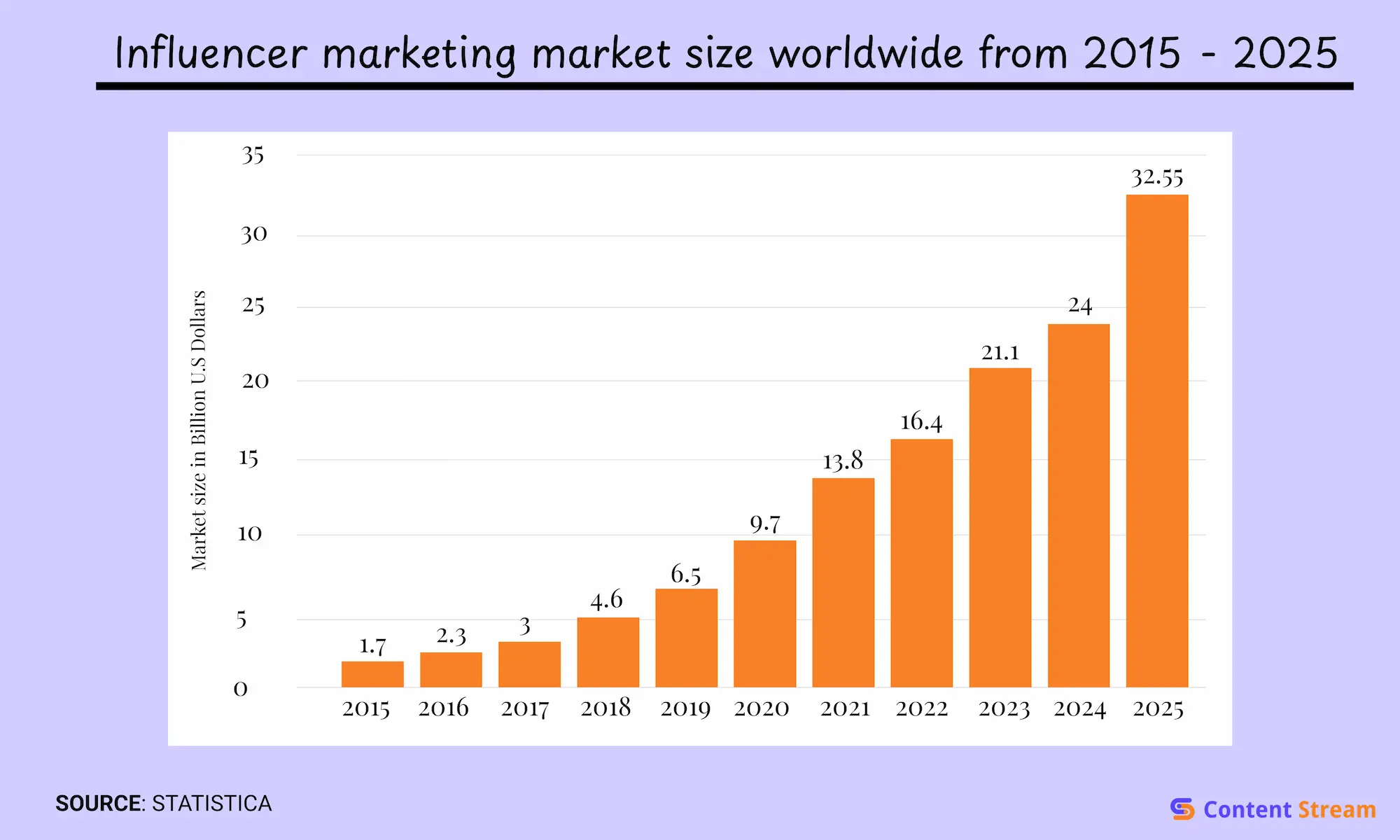
The global influencer marketing industry was worth $24 Billion in 2024, up by 3 Billion in 2023. In fact, the entire industry has been growing at a rate of $3 billion per year since 2015.
The chart below shows just how big a jump that is.
As an SEO pro, I see various ROI rates across different marketing channels. For example, the average ROI is $2 in paid ads and $3 – $5 in content marketing for every $1 spent.
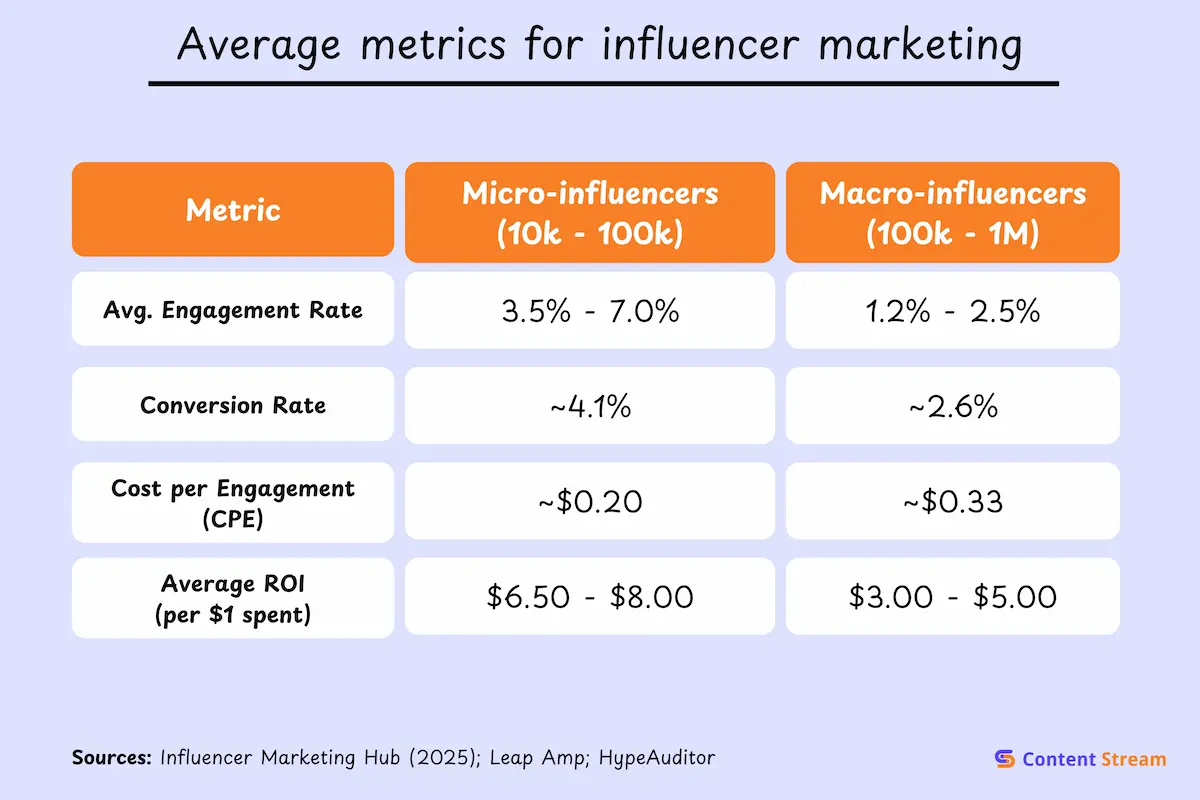
But when it comes to influencer marketing, the average ROI per $1 spent for macro influencers is $3 – $5, while with micro influencers, the rate is almost double at $6.50 – $8.
This disconnect is what we call influencer fatigue.
So what is influencer fatigue? How does it affect the ROI of fitness businesses that invest Billions annually? What does it mean for your business in particular? And are there better channels that deliver a bigger payoff?
That’s what this article is about. Read on.
Influencer fatigue is the growing sense of exhaustion, skepticism, or disengagement that audiences feel toward influencer marketing and influencer content. You see it in the way people feel oversaturated with sponsored posts and inauthentic promotional content.
Data suggests that influencer fatigue sets in with bigger audiences, because the bigger an influencer’s following, the smaller their engagement rates. Here’s a table comparing the performance gap between the micro and macro influencer tiers.
According to research published in the Internet Research journal, influencer fatigue plays out through three key psychological mechanisms:
The mechanism is straightforward: when people feel their freedom of choice is threatened by constant sales pitches poorly disguised as genuine recommendations, they mentally disengage.
You don’t need to work in the fitness industry to see this play out; all you need is an Instagram account.
A supplement brand partners with 20 influencers simultaneously, all posting the same content within the same promotional window.
So rather than amplifying the message (the brand’s objective), the campaign actually triggers what researchers call “persuasion knowledge.” Audiences immediately recognize the intent to sell and mentally filter it as noise.
It’s not just that fitness businesses are vulnerable to influencer fatigue; it’s that it can threaten your brand credibility and consumer trust.
According to Dash Social’s 2025 analysis of over 80 fitness brands, the industry has become deeply dependent on influencer marketing, with Instagram emerging as the dominant platform.
Also, the fitness and sports nutrition market, valued at $281.86 billion in 2025 and projected to reach $324.02 billion in 2026, relies heavily on influencer partnerships to reach health-conscious consumers.
According to data from Influencer Marketing Hub and HypeAuditor, as follower counts grow, engagement rates plummet. A fitness influencer with 1M followers typically sees below 1.5% engagement, while someone with 10K followers maintains 5-8% engagement.
The bigger the influencer, the bigger the risk of influencer fatigue in campaigns you pay for.
A 2025 study published in Naunyn-Schmiedeberg’s Archives of Pharmacology analyzed dietary supplement promotions by German fitness influencers and found that influencers disclosed possible adverse effects for only 2% of products they promoted, compared to 21% disclosure by manufacturers themselves.
The consequences can be severe.
For example, think about the Liver King who admitted to taking $11,000 worth of steroids monthly while promoting his “ancestral” supplement line, which generated over $100 million in annual sales.
Thousands of followers felt betrayed, and some even sued.
This could have been much worse, especially if the supplements had had undisclosed side effects.
In traditional consumer goods, bad influencer recommendations might waste money. In fitness, they can lead to injury, disordered eating, or dangerous supplement interactions.
The fitness space has become ground zero for the “de-influencing” movement, where users actively warn each other away from over-hyped products.
Trust and credibility is critical in industries like fitness because it affects people’s lives in so many ways (This is why Google applies the YMYL framework for websites in this industry.)
Users are also looking out for that trust.
So when one athlete promotes five different supplement brands in a year, none of those partnerships carry any credibility. Especially if influencers don’t tell their audience what products they are paid to promote. A 2022 FTC analysis found that over 85% of supplement posts on social media lack clear disclosure of paid partnerships. That means most content that comes across as “authentic recommendations” are actually paid advertisements.
When people sniff that out, (and they usually do) trust evaporates.
Influencer fatigue directly affects the revenue of the businesses that invest heavily in it. Here are the biggest ways the revenue loss shows up::
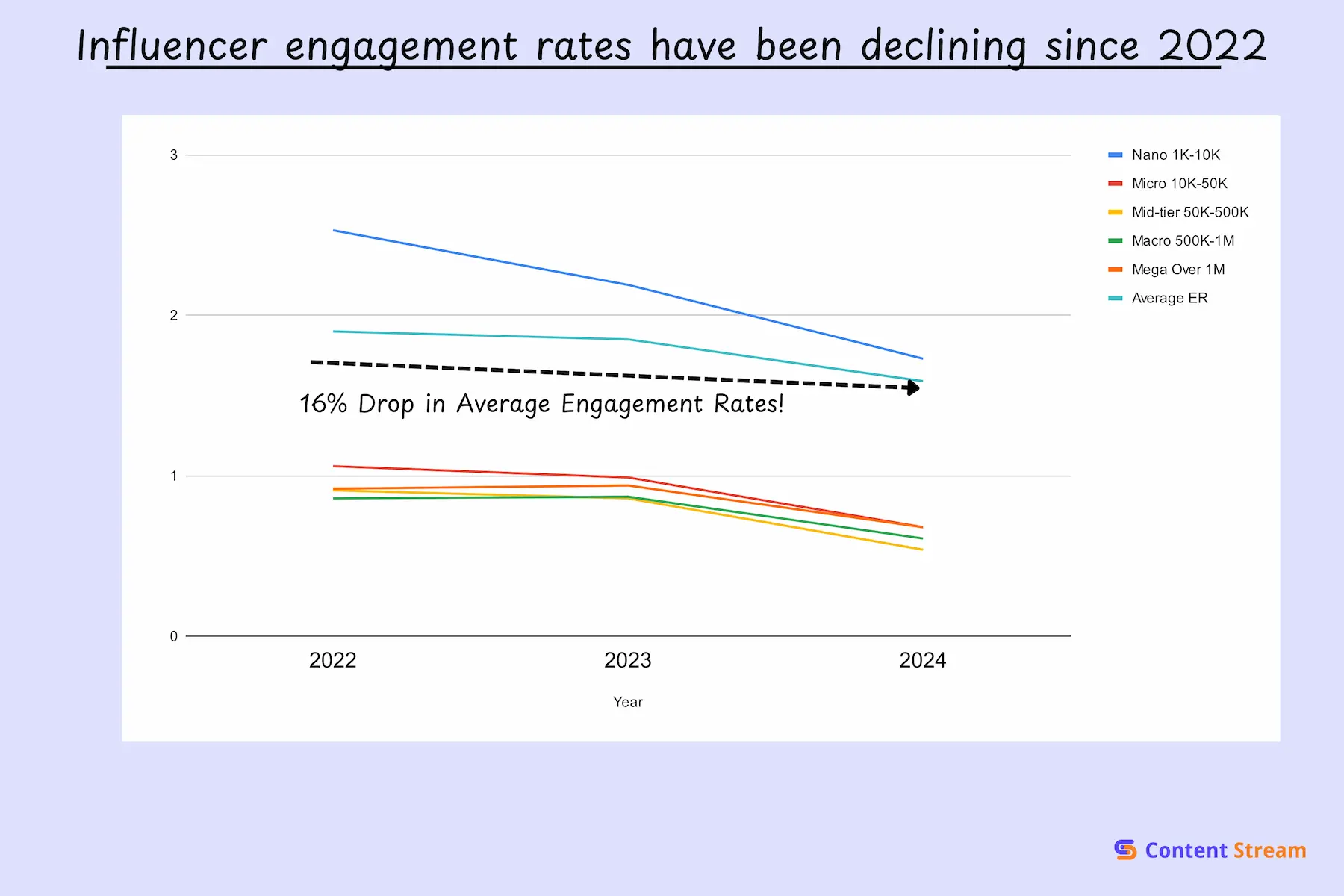
According to Influencer Marketing Hub’s 2025 Benchmark Report, Instagram’s average engagement rate across all influencer tiers declined from 2.18% in 2021 to 1.59% in 2024, a 27% drop. For fitness brands, this means much fewer people are interacting with sponsored content despite paying the same (or more) for posts.
Macro-influencers (500K-1M followers) now average just 0.61% engagement, while nano-influencers (1K-10K followers) maintain 1.73%, nearly 3x higher. A fitness brand paying $8,000 for a macro-influencer post that generates only 200K impressions faces a CPM of $40, far above industry averages.
Later’s 2025 research shows micro creators now command a median CPM of $119, with nano creators reaching up to $211. Macro-tier fitness influencers frequently charge CPMs between $20-$50, meaning brands pay premium prices while engagement continues to fall.
Industry experts estimate that approximately 33% of all influencer marketing sales go unattributed. An independent study from Social Insider found that Instagram posts containing “link in bio” actually underperform compared to those that don’t, as algorithms flag overtly promotional content. For a fitness brand spending $50,000 monthly on influencer partnerships, that’s potentially $16,500 in untracked conversions.
When a user clicks “link in bio,” they often encounter generic landing pages with multiple offers, then may use a different discount code than the influencer’s (like one from the brand’s website header). Each step introduces tracking failures that make accurate ROI calculations nearly impossible.
Influencer marketing has been an excellent marketing channel in the past, and will likely continue to be. But the influencer fatigue trends we’re seeing shows that it shouldn’t be a stand alone option for you.
Instead, consider investing in health and wellness SEO, as well as owned channels like content marketing where every investment compounds and attracts leads well into the future.
Here’s what I mean.
A comprehensive guide on “How to Choose the Right Protein Powder for Muscle Recovery” continues attracting qualified traffic months and years after publication. But with an influencer post about the same topic, visibility tapers off after about 48 hours.
SEO content compounds, as each new article strengthens domain authority, expands topical coverage, and captures more long-tail search queries.
Here are 4 steps to begin diversifying your marketing to content:
Review your past influencer campaigns and identify topics that generated strong engagement. These are signals of what your audience cares about and are likely searching for. Turn these topics into comprehensive blog posts optimized for search queries.
Look at your customer service emails, DMs, and product reviews. Each question represents a search query. “Can I take this with creatine?” becomes a blog post. “Is this safe during pregnancy?” becomes another. These are bottom-of-funnel queries from people ready to buy.
These are ‘Low-Volume, High-Intent’ keywords. While tools might say nobody is searching for a hyper-specific supplement interaction, your DMs prove they are. These small searches are an easy-win opportunity to avoid the competition and attract Top of Funnel users.
Don’t begin by targeting queries like “What is protein powder?” These are top-of-funnel and highly competitive. Instead, start with “best protein powder for lactose intolerance” or “protein powder without artificial sweeteners.” These specific, lower-competition queries attract people closer to purchase.
You can find more fitness keyword ideas here.
Fitness falls under Google’s “Your Money or Your Life” (YMYL) category, meaning search engines scrutinize health and wellness content more heavily than other industries. Google’s E-E-A-T framework isn’t optional for fitness brands. It’s the foundation of a long-term fitness SEO strategy that survives algorithm updates.
This means citing credible sources for health claims, showcasing author credentials , linking to peer-reviewed research when making medical or nutritional claims, and being transparent about product testing and review processes. Unlike influencer marketing where credibility is borrowed, SEO rewards you for building genuine expertise that search engines can verify.
If you’re a fitness business spending thousands monthly on influencer partnerships but lack a robust SEO content strategy, it may be time to start diversifying.
Content Stream specializes in helping fitness brands, from supplement companies to equipment manufacturers to multi-location wellness clinics, build comprehensive content strategies that drive sustainable organic growth.
Stop renting your audience and start owning your traffic. If your fitness brand’s customer acquisition cost (CAC) is rising while influencer engagement falls, you need a strategy that compounds. Request a free content & SEO audit now to see where to focus your content building efforts.

I’m Matthew, a personal trainer turned SEO who’s worked with brands like Gymfluencers, Sailo, ClickCease, and Fraud Blocker. These days, I help small to medium sized companies grow their reach with smart, search-focused content.
