You know the debunked statistic that we see thousands of ads every day? Well, no matter how many ads we see, fitness brands still make a huge chunk of that. With over 93,000 gyms in the US, and the average gym investing up to 12% of their monthly revenue in advertising, safe to say most people are bombarded with gym ads. And that’s just gyms alone. Add other fitness brands to the mix, and it’s clear why most fail to differentiate.
But, as we showed in our tips for getting more gym members, the best fitness campaigns are able to cut through the noise and reach their ideal audience with a simple message.
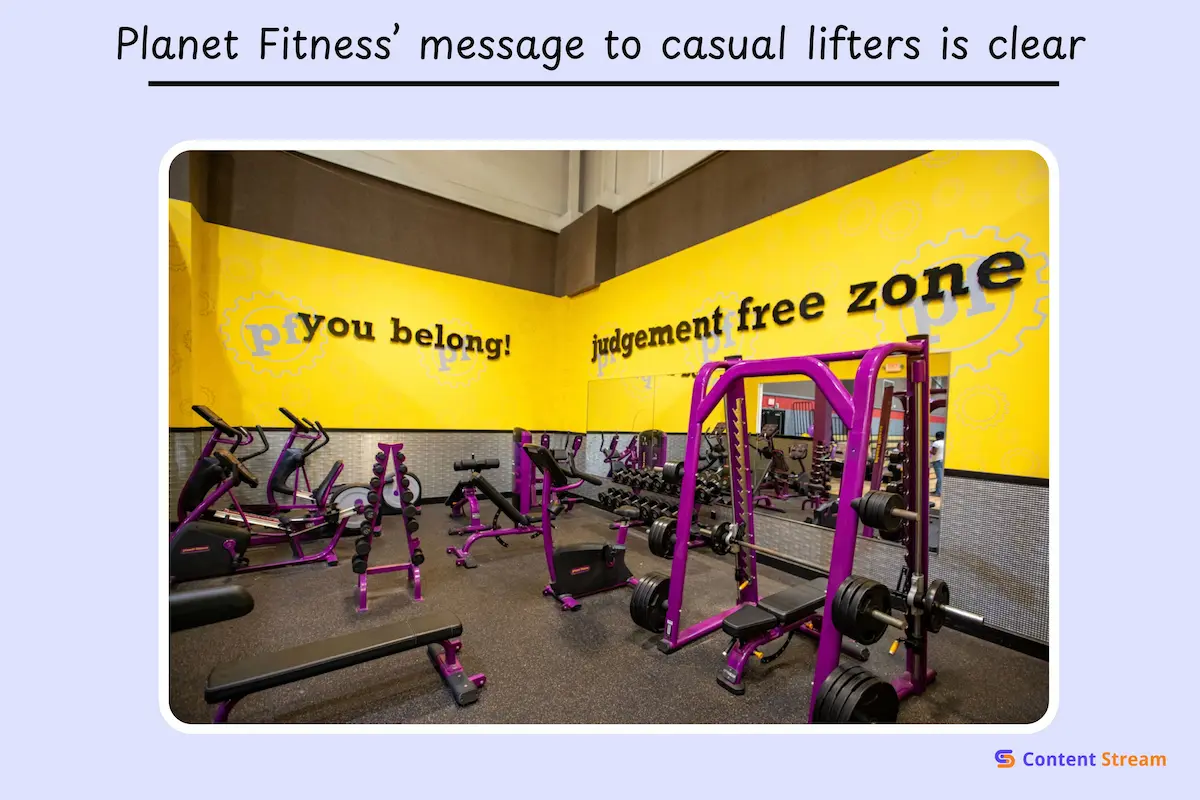
For Planet Fitness, that’s “Judgement free zone”. For lululemon, that’s “Sweatlife.”
But which fitness campaigns really have an effect on audiences? Why do they work so well? And what lessons can your brand take away?
Read on to find out all this and more.
Planet Fitness has built their business model around being the “anti-gym,” and you see that in how they heavily market themselves as the “judgement free zone”. This, paired with other campaigns, like the discontinued Pizza Monday, actively signal: “This is not a place for hardcore bodybuilders.
It’s for the every day person who wants to exercise.
The Judgement Free Zone campaign is one of the best examples of niche fitness advertising. They didn’t target the 15% of the population that are gym rats who already love the gym. They targeted the remaining 85%.
Here’s how you can take inspiration from Planet Fitness:
Run a “Beginner-Only” Program: “Nervous about the gym? We built this class for you. 100% beginners, 0% judgement.
Offer a “No-Sweat Intro”: This is a 15-minute consultation to see the space and meet a coach. No workout, no pressure. It’s the ultimate low-barrier offer for a potential gym member with reservations.
In 2016, Equinox ran its “commit to something campaign,” a high-fashion, provocative campaign that had almost nothing to do with treadmills. The stunning, artistic photos featured models in various scenarios, some of them showed commitment, and others painted a vague mystique that draws you in out of curiosity.
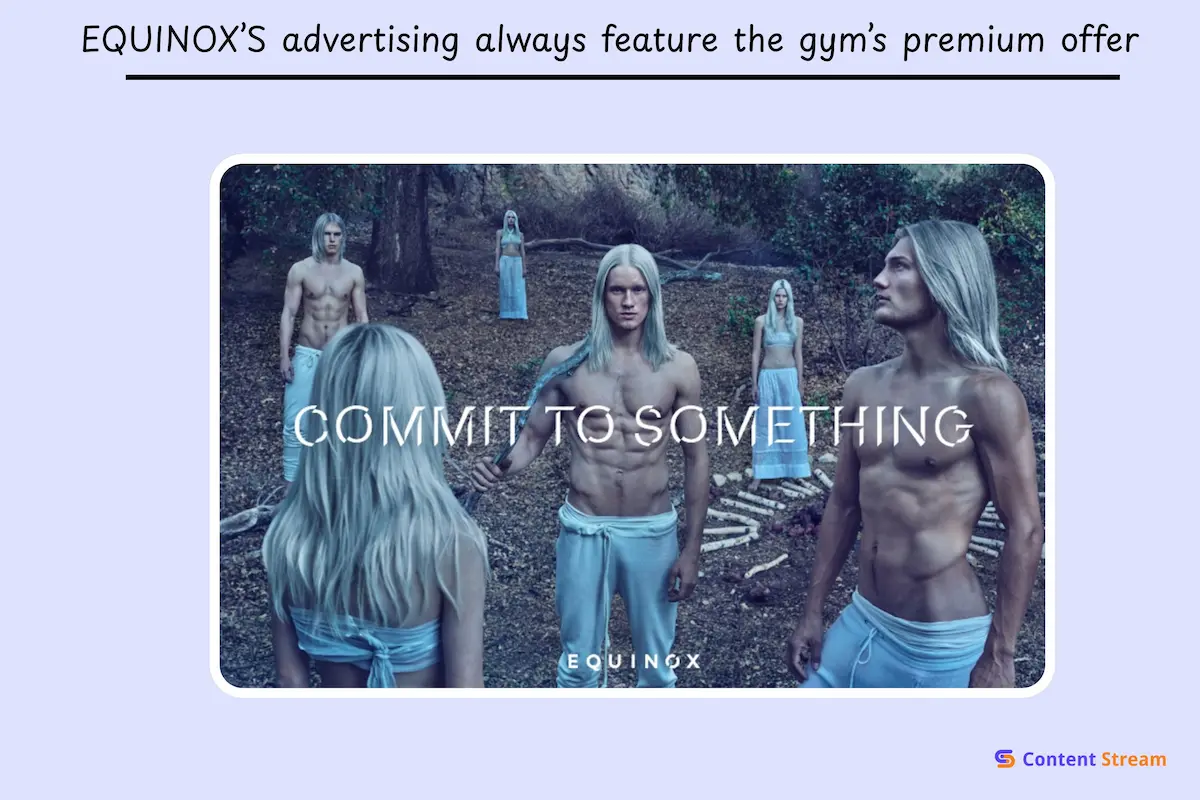
The ads say, “We are not a gym; we are a luxury brand for dedicated, interesting, and uncompromising people. You are one of us.” It justifies the high price by selling an elite identity.
Equinox’s campaigns are definitely unique and they stand out. But yours doesn’t have to be a luxury fitness business to take lessons.
For example, if you offer premium services, run ads that speak to a specific value: “For those who are serious about their health,” or “Small-group training for dedicated individuals.”
SoulCycle broke out by selling a cult-like experience. They did this by hiring charismatic “talent and influencers”, using dark, candlelit rooms, and having instructors deliver high-energy, inspirational “sermons.”
It was new, it was fresh, and honestly, a little bit weird. But that’s why it worked!
They created a community hub outside of home and work. People weren’t buying a 45-minute workout; they were buying an emotional, high-energy, “in-group” experience.
Besides the word of mouth and shock value, SoulCycle’s Find Your Tribe also created massive FOMO among people, making everyone want to join.
The lesson here is to not be afraid to create a new atmosphere for people that takes the experience to the next level.
Solidcore is a Pilates studio known for being incredibly difficult. So instead of hiding this, they created ads that focused on the message, “fail with us.”
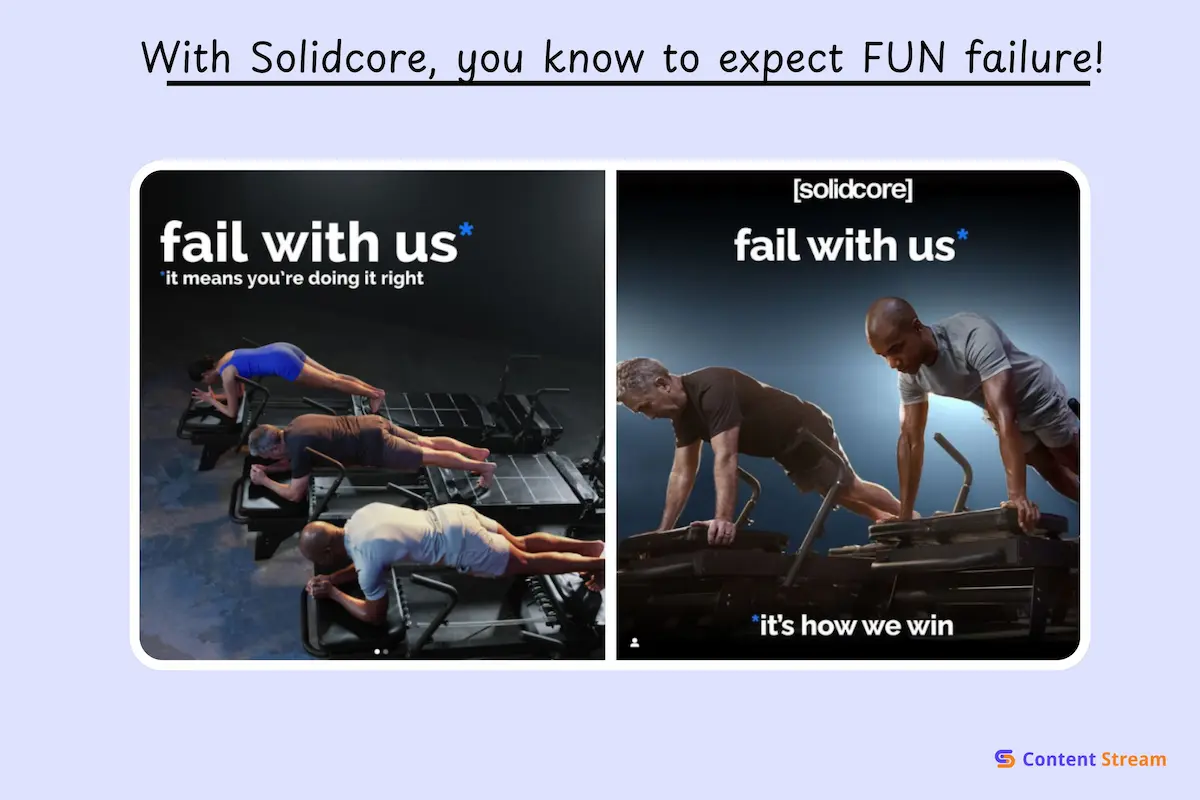
Fitness is a long and challenging journey, and there will definitely be failures. By being upfront about that, Solidcore offers people a safe, supportive place to fail and get stronger. It’s refreshingly honest and gives people psychological comfort by removing the pressure to be perfect.
A great way to replicate this would be with your ad copy. Tell people what to expect when they show up for classes. Or, offer encouragement and let people know that they can always find support.
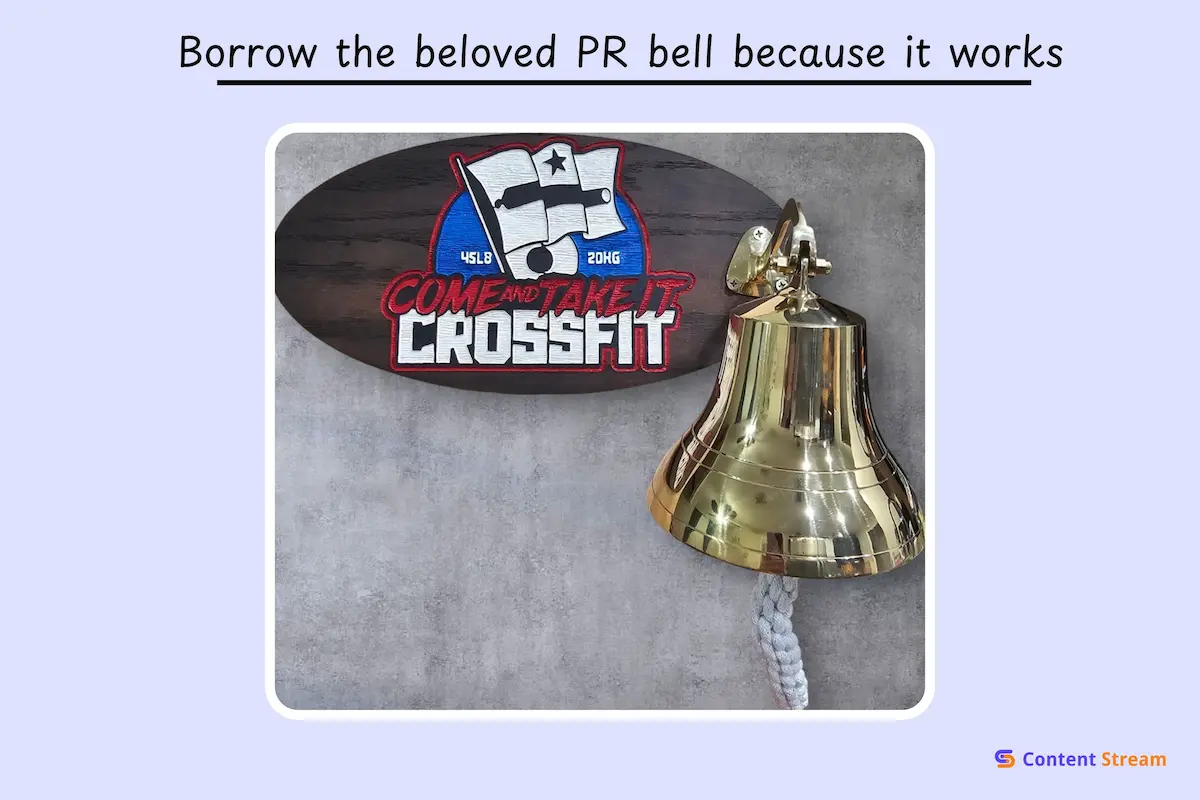
This isn’t one brand; it’s a brilliant, popular tactic perfected by thousands of local CrossFit boxes, HIIT studios, and indie gyms. A $20 brass bell hangs on the wall. When a member hits a new Personal Record (PR), they ring it. Then, the entire gym stops, cheers, and claps.
It doesn’t matter if your PR is someone else’s warm up. You made progress and the whole gym celebrates that.
One reason this is so brilliant is that this $20 object is a “content manufacturing device.” Someone films it. The member immediately posts that video to their Instagram Story, tagging your gym. It is the most authentic, emotional, and powerful ad for your “supportive community” that you could ever ask for.
Just do it. If you don’t have one already, get a PR bell for your gym.
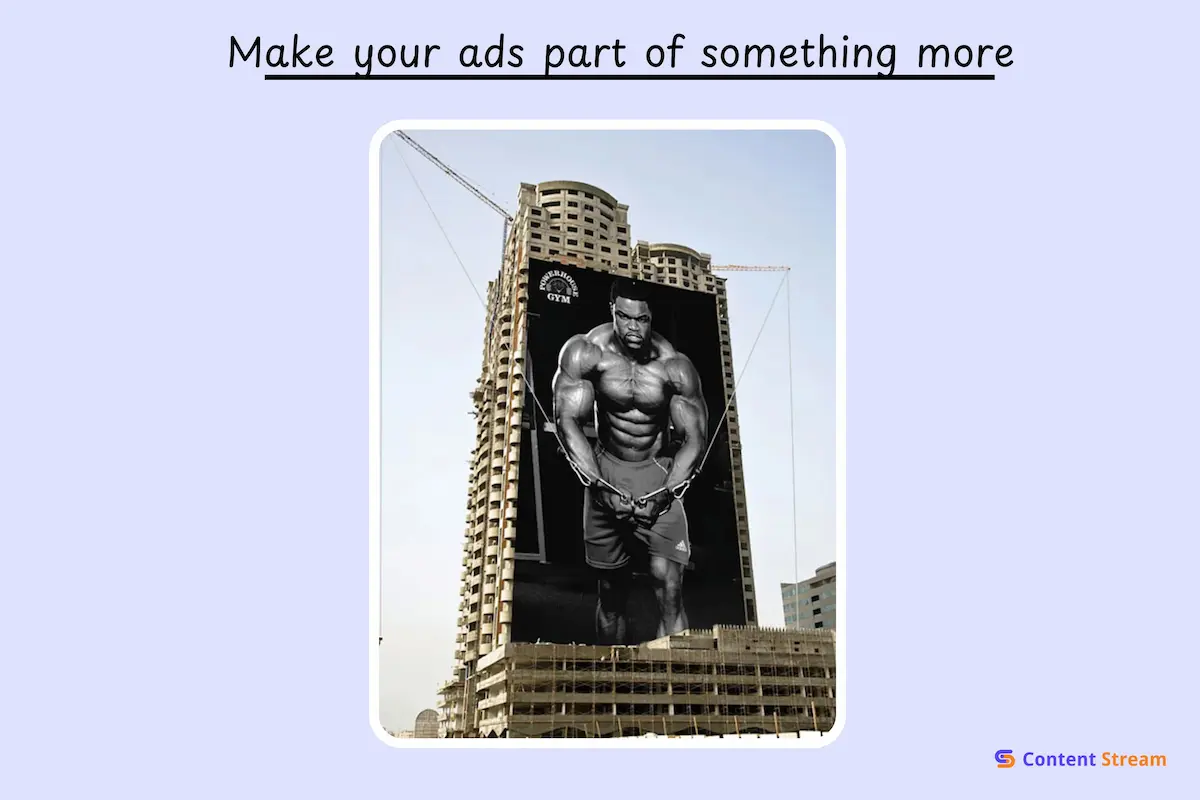
This legendary outdoor ad was pure genius. The gym placed a massive billboard of a bodybuilder doing cable flys on the side of a building under construction. Notice how the cranes are perfectly positioned too!
The construction site campaign was clever, location-specific, and stopped traffic. It perfectly communicated the brand’s name without a single word of copy.
Guerilla marketing has always been an effective way to draw attention. Think of how your brand can leverage this. Maybe it’s something as simple as holding a fitness class outside, or, sponsoring a local school team with your athletic wear. Sometimes, involving the community and people outside your brand is enough to gain attention.
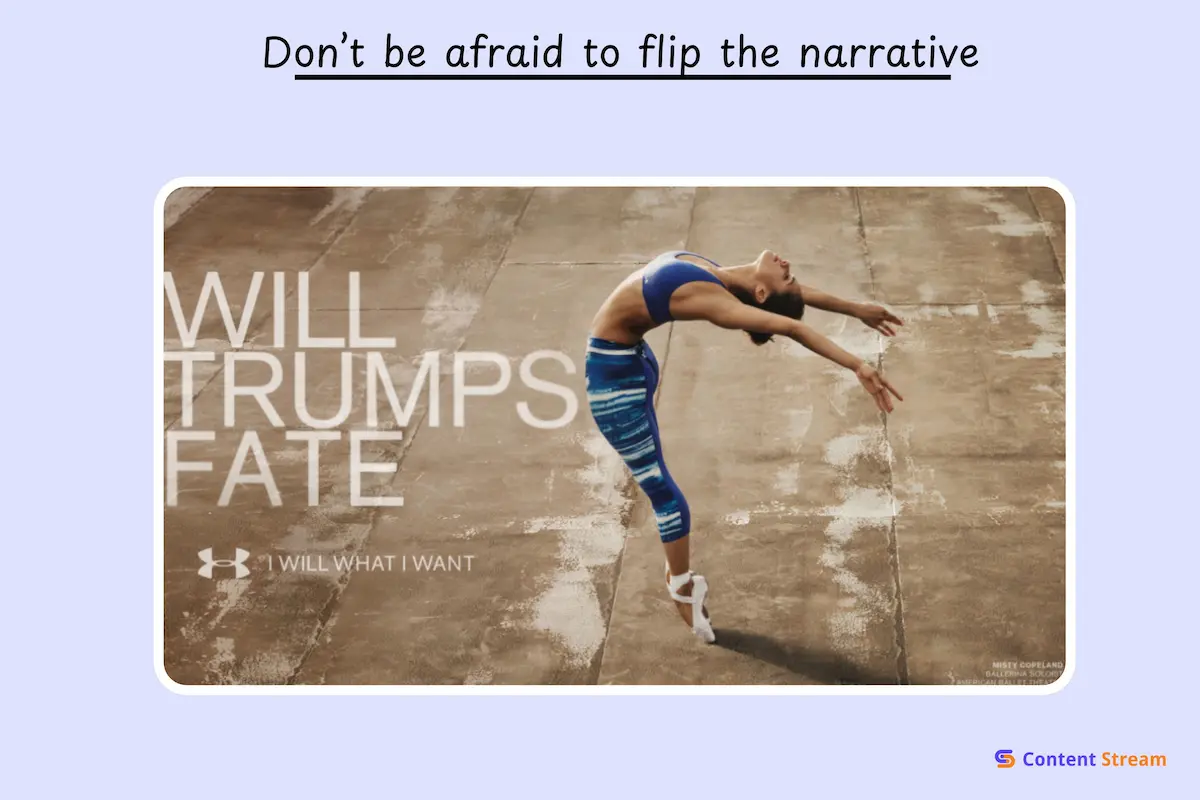
Under Armour had a problem: women saw them as “hypermasculine” and not for them. So they hired ballerina Misty Copeland and supermodel Gisele Bündchen; two women who didn’t fit the traditional masculine mold.
Copeland’s ad showed rejection letters and criticism she faced: “You have the wrong body for ballet.” Bündchen trained while negative comments scrolled across the screen. Both ignored the noise and kept going.
By showing grace, determination, and quiet strength, Under Armour told women: “You belong here too.”
Don’t be afraid to show the full range of your brand’s offerings. You may cater largely to one demographic, but like Under Armour shows, your brand’s perception can grow as you welcome new customers.
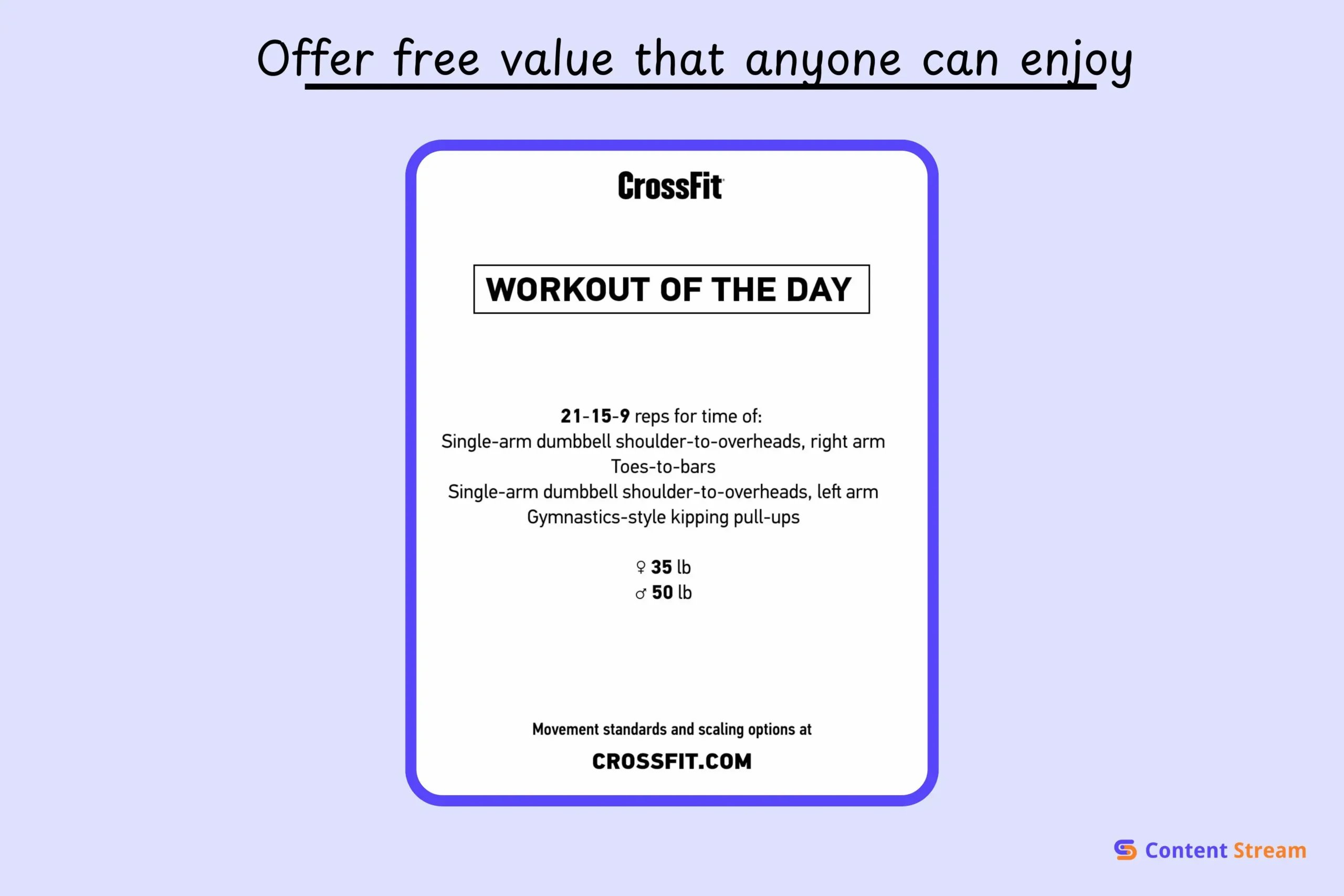
In 2007, CrossFit started posting a “Workout of the Day (WOD)” for free. No ads. Just the workout, every single day.
This was before it became the global juggernaut it is today. Back then, it was a simple daily action the brand used to keep people active, while also drawing the curiosity of new people passionate about fitness.
Before long, a global community formed in the comments, posting their scores and competing. This built an “in-group” with its own language before the gyms even existed. The demand for gyms came from the community itself. They gave away their core product (the workout) for free, and in doing so, built a multi-billion dollar licensing business.
There is massive value in freebies. Gym owners will have seen this with people who come for free classes and end up signing up. Yours could be handing out free samples of your products, or offering free online coaching.
The 66 day challenge was simple. Gymshark simply asked its community and target audience to pick a goal and document their fitness journey for 66 days (the time it supposedly takes to form a habit) using the #Gymshark66 hashtag.
Besides just increasing brand awareness, this was a User-Generated Content (UGC) goldmine. Gymshark didn’t have to create a single ad; their customers created millions of authentic “before and after” stories. It’s infinitely more trustworthy than a polished ad. It’s not a company saying, “Our product works”; it’s a real person showing you how it worked for them.
This one is easy to replicate because fitness businesses have been doing it forever. Launch your own 30-day or 60-day challenge, and offer prizes for a wide range of winners across all your customer demographics. This has the potential to incentivize the content creation you want.
Blink’s fitness advertising is a master class in inclusivity. Their fitness ads never feature elite athletes; they feature 100% real members of all shapes, sizes, and ages.
Many fitness brands feature messaging that talk about pushing you to your best, but with Blink fitness, some of the core messages are “We’re members not models” and “Every Body Welcome.”
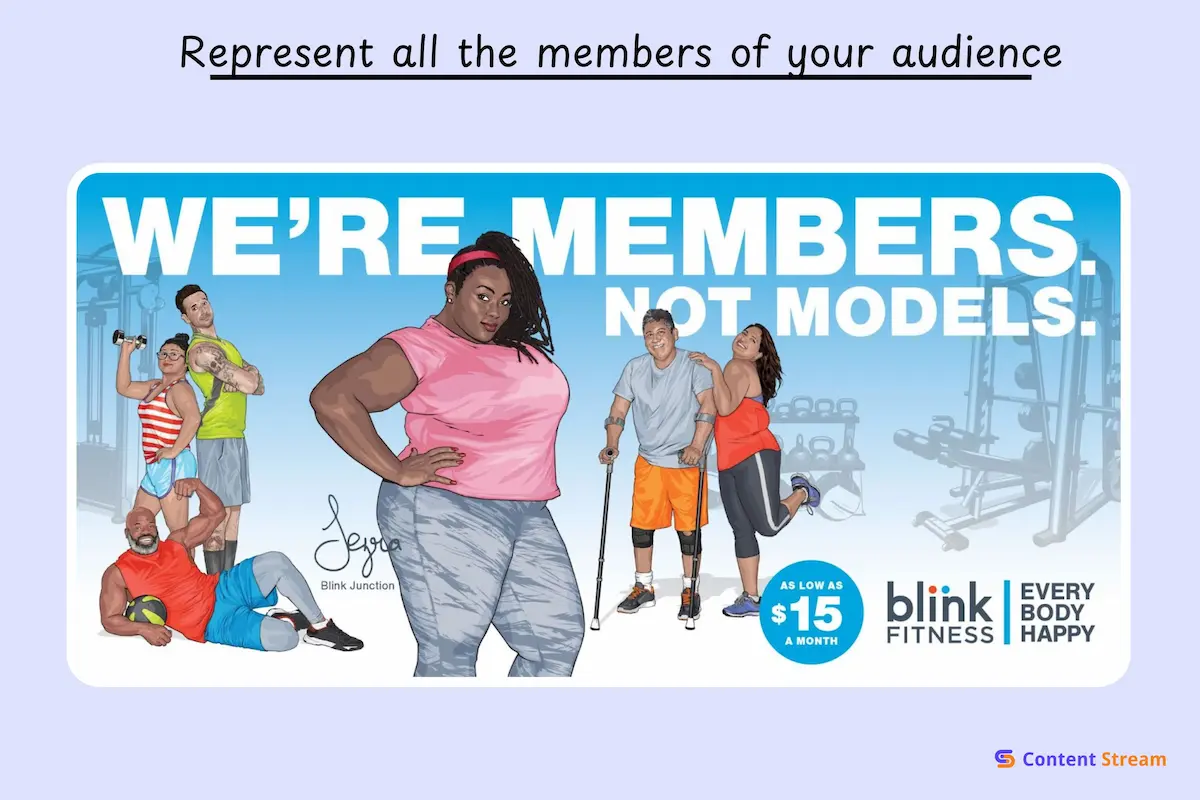
The brand provided the perfect middle-ground for the mainstream audience who are not as “anti-gym” as Planet Fitness, but not as “hardcore” as Gold’s Gym, for example.
If you’re looking to attract members of your community, copying Blink’ fitness ad campaign format might be the way to go. Simply use marketing material that reflects your real client base. Or, you manufacture supplements for elite bodybuilders, then you need pro bodybuilders on your marketing materials.
Gymbox, a rebellious London-based fitness brand, launched its “Cutting Through the Bullshit” campaign to stand out in the crowded January fitness market. Instead of “New Year, New You,” their ads featured bold, edgy text that looked like graffiti. Lines included: “Stop ‘finding yourself.’ Start ‘losing your shit.”
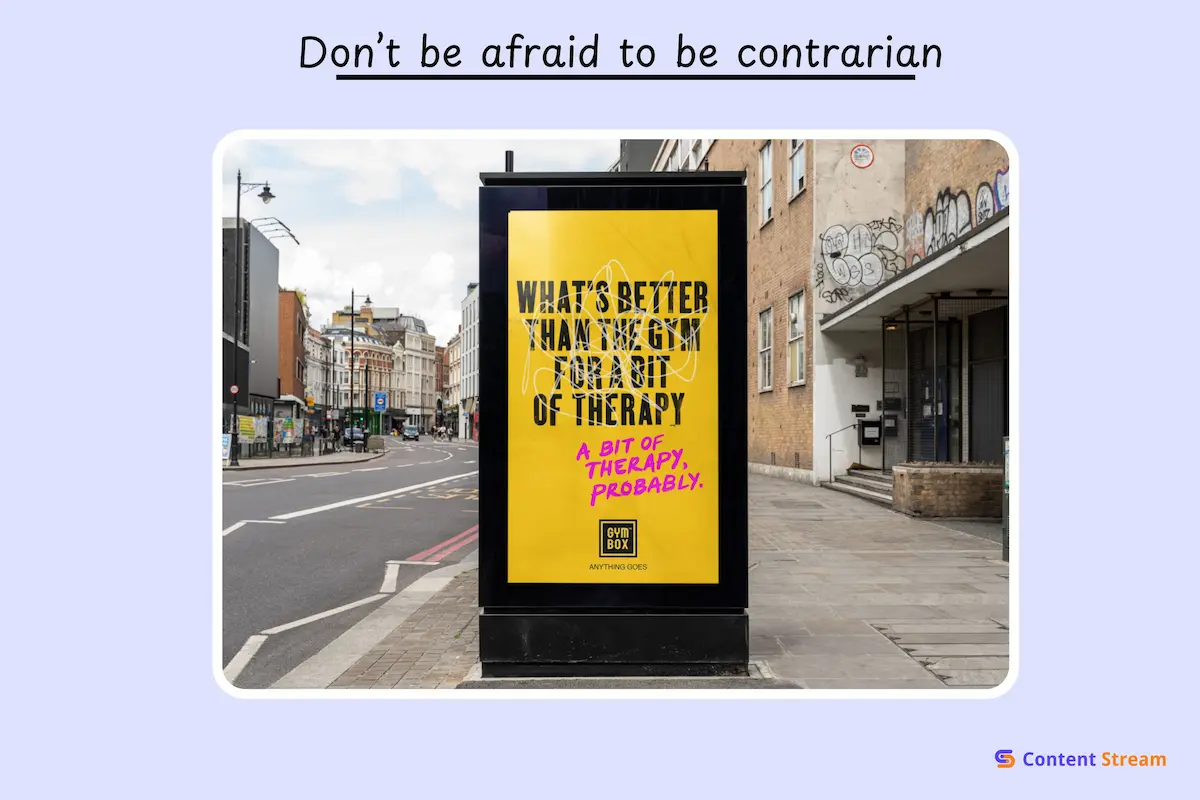
This edgy, humorous campaign worked by rejecting clichés, defining the brand by what it wasn’t, one of the fitness advertisements that pushed the grind lifestyle.
Find your “enemy” (the cliché in your niche) and use a hyper-honest, contrarian voice to challenge it directly. If you’re a supplement brand, that could be challenging the idea to put protein in everything, even though adding BCAAs doesn’t immediately double a supplement’s value.
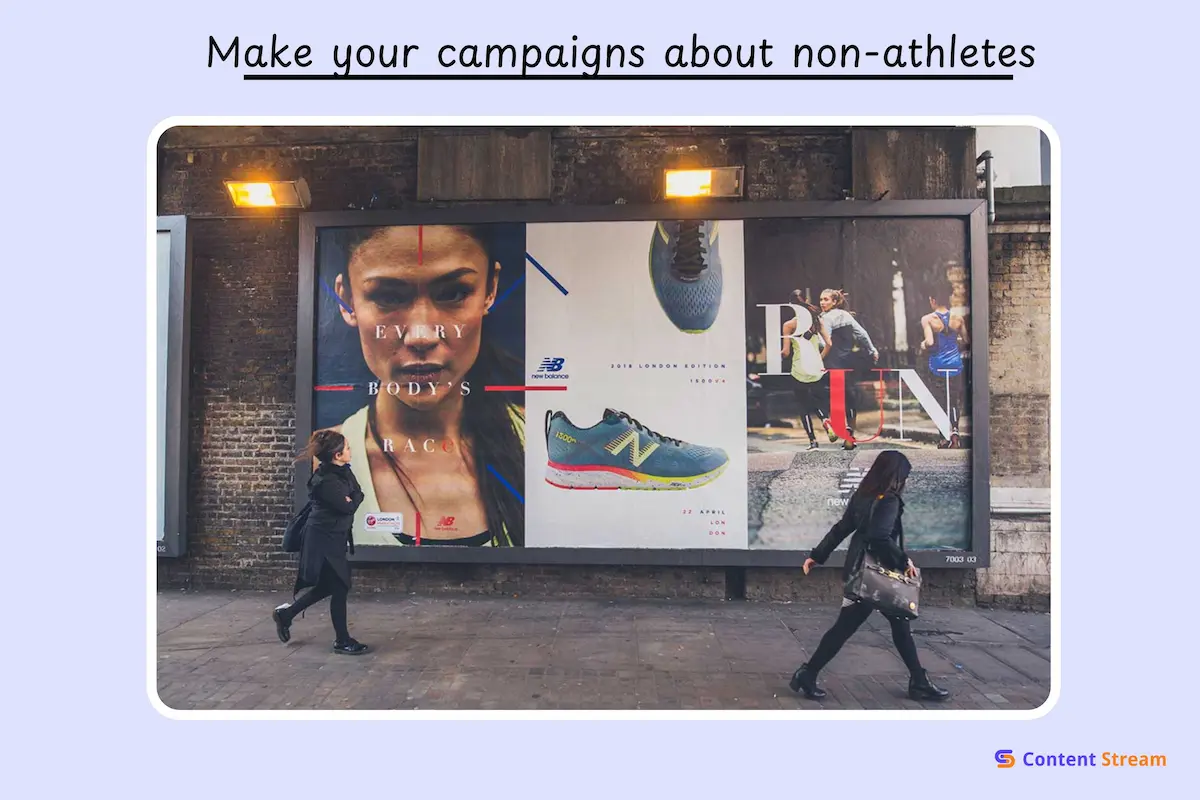
New Balance’s “Everybody’s Race” campaign was created around the London Marathon, and it stood out by highlighting how running is more a shared human experience than a super focused athletic performance. The fitness ad campaign reminded us that the marathon is for every runner who showed up, whether or not they were sponsored by fitness brands.
It was so powerful because most ad campaigns from the fitness industry feature glossy perfection or celebrity endorsements, “Everybody’s Race” focused on real runners with real, inspiring stories: people training through rain, juggling work and family, or running for personal causes.
Plus, the campaign partnered with JD Sports and activations like the Runaway Pub, where runners could trade their logged miles for pints.
To create campaigns like “Everybody’s Race,” focus on shared purpose over personal bests. Show the full spectrum of your audience, the athletes and everyday people too.
lululemon’s was a lifestyle campaign, a challenge, and a hashtag all in one. It encouraged the community to do something active, every single day for a month and post about it. This has eventually grown into the Sweatlife annual festival held every year all around the world.
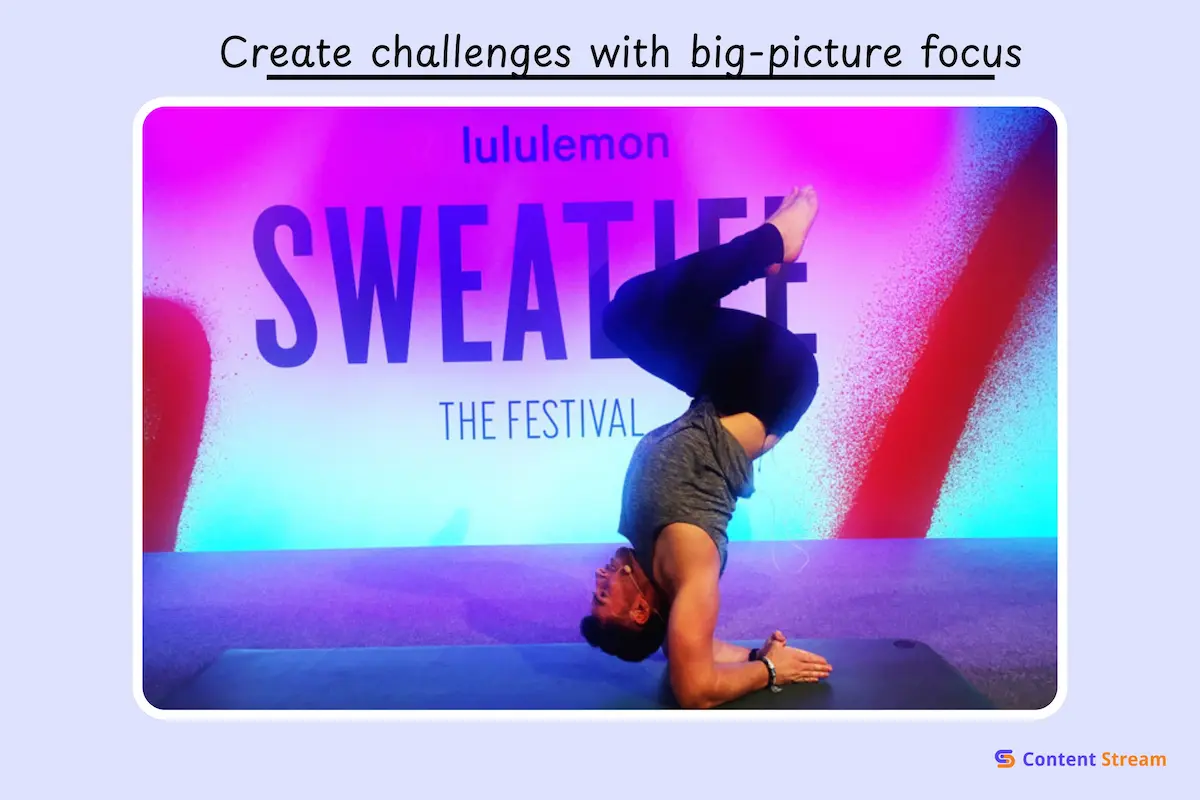
It sold because it was framed as more than an exercise and as a 24/7 commitment to wellness (which also, conveniently, means you need more yoga pants).
The lululemon Sweat Every Day is a good example of an health and fitness advertisement to copy because it can help build a loyal, long-term community.
This isn’t the first fitness challenge we covered on this list. But, there are new lessons to take away. For example, think of one challenge that focuses on consistency, not intensity. You could call it a “7-Day ‘Just Move’ Challenge.”
Or, if you sell exercise equipments, have people share their homegym workouts, but also how their set up has grown. This way, everytime someone gets a new piece of equipment to grow their home gym, they have something to share!
The most successful fitness advertising campaigns are rarely about a discount; the ad campaigns on this list tell us as much. But after a potential member sees your clever ad, what’s the first thing they do?
They Google you.
If your website is a ghost town or your blog hasn’t been updated since 2021, you lose that lead. Ads work better when they sit beside a fitness gym SEO system that captures demand after people search. An optimized website with steady content will power all the marketing campaigns you invest in.
That’s where Content Stream comes in. Our agency specializes in helping health and fitness websites show up first in search. We do the work, you receive the leads.
Book a free audit and see how you can rank above your competitors.

I’m Matthew, a personal trainer turned SEO who’s worked with brands like Gymfluencers, Sailo, ClickCease, and Fraud Blocker. These days, I help small to medium sized companies grow their reach with smart, search-focused content.
