Shopify Fitness Business SEO: Collection Pages, Schema & Content Strategy

If you run a Shopify store, you’ve likely optimized your website using all the standard best practices: optimized your meta descriptions, added alt text to images, and written product descriptions with keywords.
But, your fitness store is still buried on page 3.
Here’s why that’s happening:
Generic ecommerce SEO doesn’t work for fitness stores because your customers search differently than other shoppers. They’re looking for ingredients, solutions, and brands all at once. So, they may search “whey isolate 25g protein” one minute and “best protein for muscle gain” the next.
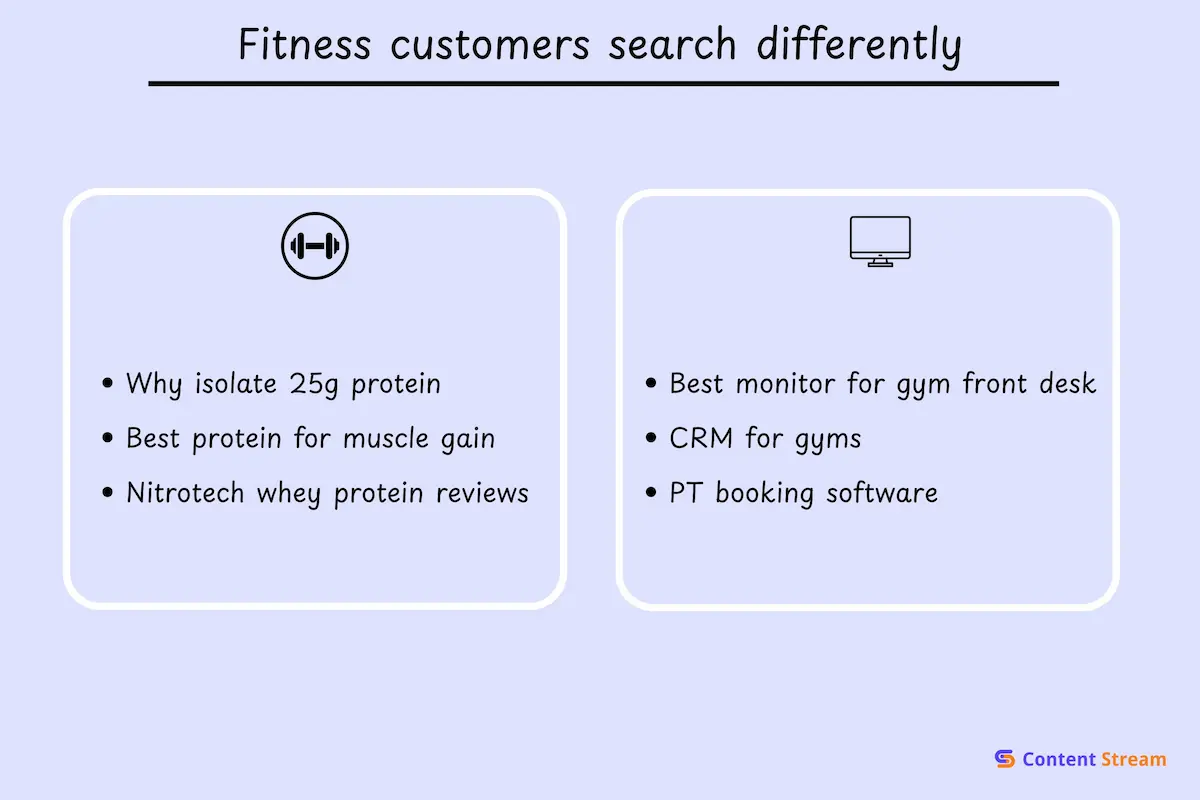
This is in contrast to other industries, where the buyer just searches for what that thing is. “CRM for gyms.” “Best monitor for home office.”
In this guide, we’ll show you the SEO strategies that can actually move the needle for supplement stores, gym equipment shops, and activewear brands on Shopify.
You can’t use regular fitness SEO optimization strategies because fitness customers don’t search like fashion or tech buyers.
Someone searching “protein powder” might also search
They’re comparing ingredients, benefits, and brands simultaneously.
They’re also visual browsers. Image search matters more in fitness than almost any other ecommerce vertical.
This fundamentally changes how you should structure your store.
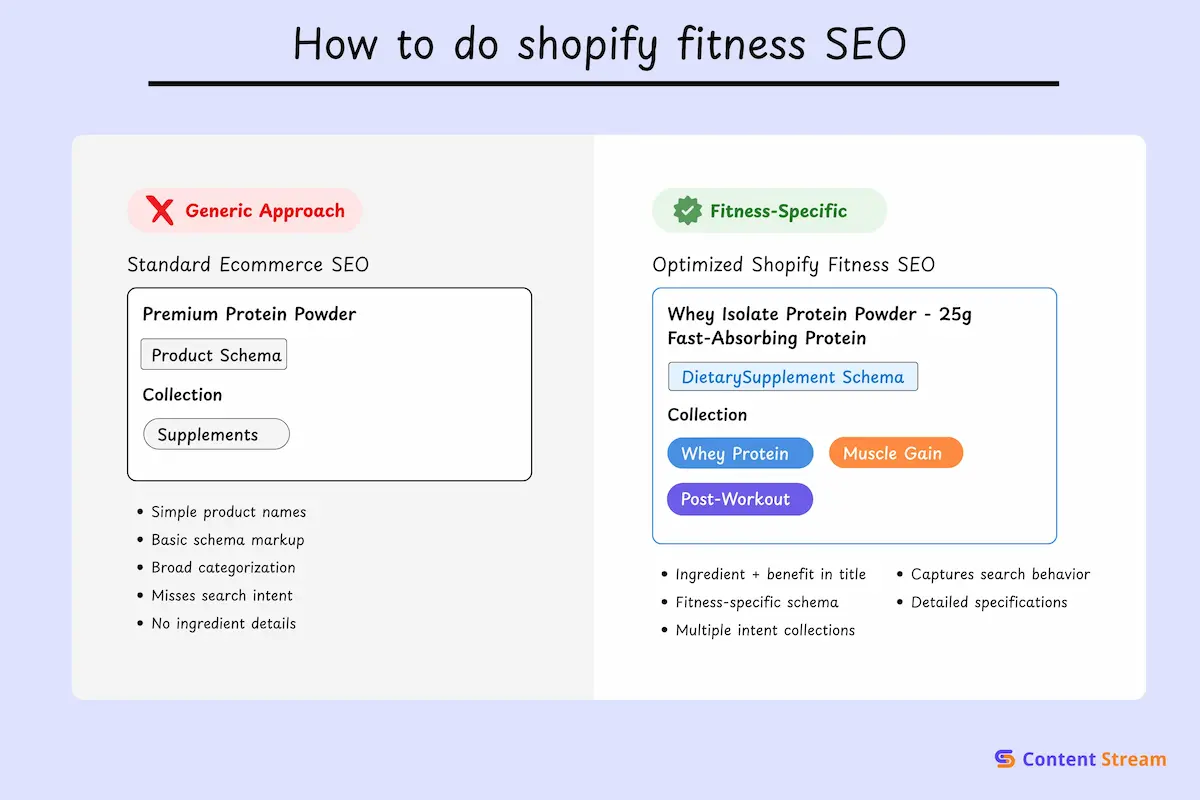
Your product titles need ingredients plus benefit, not just product name.
So instead of “Premium Protein Powder,” you could use “Whey Isolate Protein Powder – 25g Fast-Absorbing Protein.” The second version captures multiple search intents in one title: (product name, quantity, and even how the supplement works.)
Your collection structure should also reflect how people search, addressing both ingredient type and by goal. Don’t just create a “Protein Powder Collection.” Build separate collections for “Fast-Absorbing Whey Protein” and “Slow-Release Casein Protein.” Each targets different search intent and buying stages.
But that’s not all.
If you really want to cover all your bases, your schema markup also needs to be fitness-specific, not generic Product schema. DietarySupplement schema tells Google exactly what’s in your products, from active ingredients to recommended dosage.
We’ll cover this in detail next. But first, let’s look at some of the technical foundations you could be getting wrong.
Shopify’s default URL structure creates URLs like:
“yourstore.com/collections/protein/products/whey-isolate.”
That’s great but, just one problem. Google treats these as nested pages with less authority. Yourstore.com/collections gets the most authority, /protein less so, /products gets even less authority, and /whey-isolate is really buried.
Unfortunately, THAT’s the page you want to send users to.
Here’s a more effective alternative:
Use clean URLs like:
competitorstore.com/whey-protein-isolate
Shorter URLs also get more clicks in search results (up to 250% more clicks in search engines). When someone sees two similar listings, they’re more likely to click the cleaner, more readable URL.
The fix requires theme code edits and 301 redirects.
This may not be as simple as a settings change, and you may need to theme code edits + 301 redirects. But the SEO lift is significant.
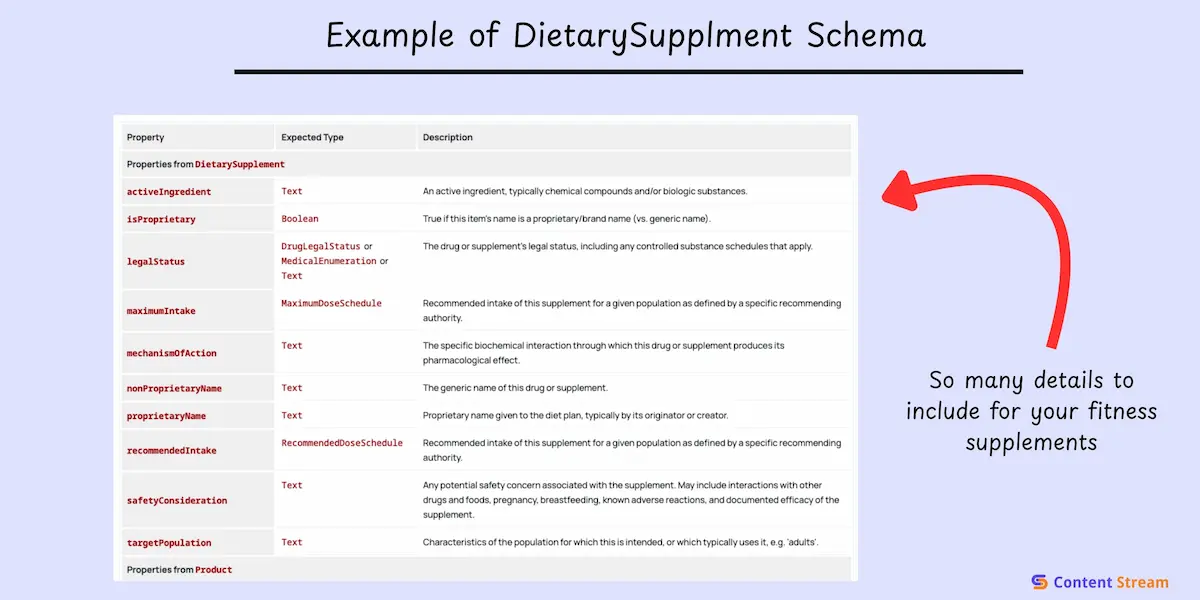
DietarySupplement schema tells Google exactly what’s in your products: active ingredients, recommended dosage, target population. This means you can appear in specific searches like “whey protein isolate 25g per serving” instead of just “protein powder.”
The more specific the search, the higher the purchase intent.
That’s why someone searching for exact protein amounts in a product is much closer to buying than someone just browsing “protein.”
This could be as simple as adding a snippet of HTML code on your important pages to begin, and then working with a developer to make the changes site wide.
According to web321.co, 23% of all Google searches are image searches. That means if you’re not optimizing for image searches, you’re already leaving out a quarter of your potential search visibility.
Among other things, that means you can’t just upload images named “IMG_1234.jpg” and call it done.
File names should be descriptive like “adjustable-dumbbells-home-gym.jpg.” Alt text also needs product+use case, like “woman using resistance bands for glute workout.” Include both product shots and lifestyle shots since they capture different search intent.
Someone searching “home gym setup” might discover your equipment through image search before they even know your brand exists. That’s cold traffic you’re currently missing because your images aren’t optimized for discovery.
Collection pages are the category pages that group your products together. Think “Protein Powder” or “Gym Equipment.” These pages drive most of your organic traffic because they rank for broad, high-volume searches.
Someone searching “resistance bands” or “pre-workout supplements” would ideally land on a collection page, not your homepage.
A traditional way stores use collections is grouping them around inventory. But grouping around search intent is much more effective.
Customers search by ingredient type, goal, and even use case.
Your collections should match these search patterns.
So instead of using a traditional structure like Protein Powder, Pre-Workout, Gym Equipment, use a search-optimized structure.
That means: Fast-Absorbing Whey Protein, Plant-Based Protein for Vegans, Home Gym Equipment for Small Spaces, Travel-Friendly Resistance Bands.
Each collection page becomes a landing page for specific searches. More targeted traffic means higher conversion rates.
Also, link related collections together. “Home Gym Equipment” should link to “Resistance Bands for Home Workouts.” This keeps people browsing and helps Google understand your site structure.
High-intent searches like “whey vs casein” or “resistance bands vs free weights” bring qualified traffic from people who are close to buying but need information first.
Optimize for these searches by creating content that satisfies the exact search intent.
Here’s a structure you can use:
These pages can generate backlinks from Reddit, fitness forums, and Q&A sites. Currently, Reddit appears in 97.5% of product search queries in Google, so not a bad source to be linked from.
Here are some titles that you could also use:
The best fitness blog posts answer real questions and naturally feature your products as solutions.
Topics that work:
Keyword research is a great place to start when looking for questions people are searching for. You can also check Reddit fitness threads, Quora questions, and even YouTube comments. People are asking these questions constantly.
People looking to buy supplements, and especially those who have done a bit of research, are likely to search “whey isolate protein,” “casein protein before bed,” or “plant-based protein pea,” as opposed to just “protein powder.”
Your blog can become a really great resource here. You could create blogs that satisfy these queries, like:
Each post targets specific ingredient searches while building topical authority. This helps Google see your site as a fitness supplement resource, not just a store.
Search behaviour in fitness doesn’t always follow the same pattern as other industries, and so, you can’t optimize for it in the same way.
So instead of generic and copy/paste strategies, start with the foundation: Fix your collection URLs and add fitness-specific schema. Then build content that answers real questions and naturally connects to your products.
If you’re operating with a smaller team, we recommend picking one area and implementing first. The fastest wins usually come from image optimization and collection restructuring.
If you need help building a content strategy that brings in customers who actually buy, ContentStream works specifically with fitness brands. Let’s talk.
DietarySupplement schema is structured data telling Google your product’s ingredients, dosage, and usage. Add it through theme code or apps like Schema Plus. You can also just add an HTML widget to your page and paste the schema in there.
Technical fixes show results in 4-8 weeks. Content strategy takes a bit longer, 3-6 months, on average. Other improvements, like image optimization could yield results within weeks.
Start with ingredient searches for supplements since they have a higher purchase intent. Product names generally work better for branded equipment or when you carry recognizable brands.
Yes you can. Start by targeting long-tail ingredient searches like “whey isolate 25g protein” instead of broad terms (bigger brands tend to dominate those.

I’m Matthew, a personal trainer turned SEO who’s worked with brands like Gymfluencers, Sailo, ClickCease, and Fraud Blocker. These days, I help small to medium sized companies grow their reach with smart, search-focused content.
Get a free SEO audit and discover the exact keywords and strategies that will grow your fitness business. Or, jump straight into a consultation to discuss your goals.
No sales pitch. No obligations. Just a detailed analysis of your site's SEO performance or a strategic conversation about growing your business—with a clear roadmap to more traffic, leads, and revenue.
