How to Rank for GLP-1 Related Terms: SEO Blueprint
We created this guide is for practices that already offer support, supplementation, or recovery programs alongside GLP-1 treatment, and want to make sure the right patients can actually find them.
Tips on where to start:
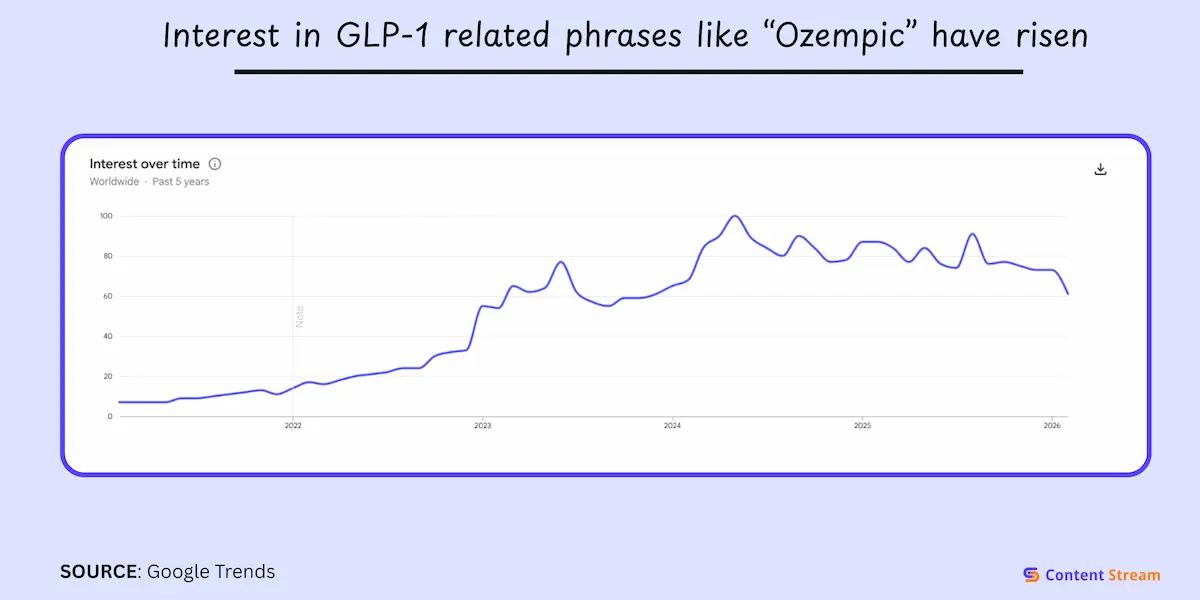
Over the past few years, there’s been a massive increase in the number of searches, and general interest in GLP-1 agonist medications like Ozempic, Wegovy, Mounjaro and semaglutide.
And this isn’t just hype or non-stop news cycles.
Google trends data shows that relative search interest in “Ozempic” grew roughly 36% between 2022 and 2024, with current US monthly search volume estimated at 1.6 million.
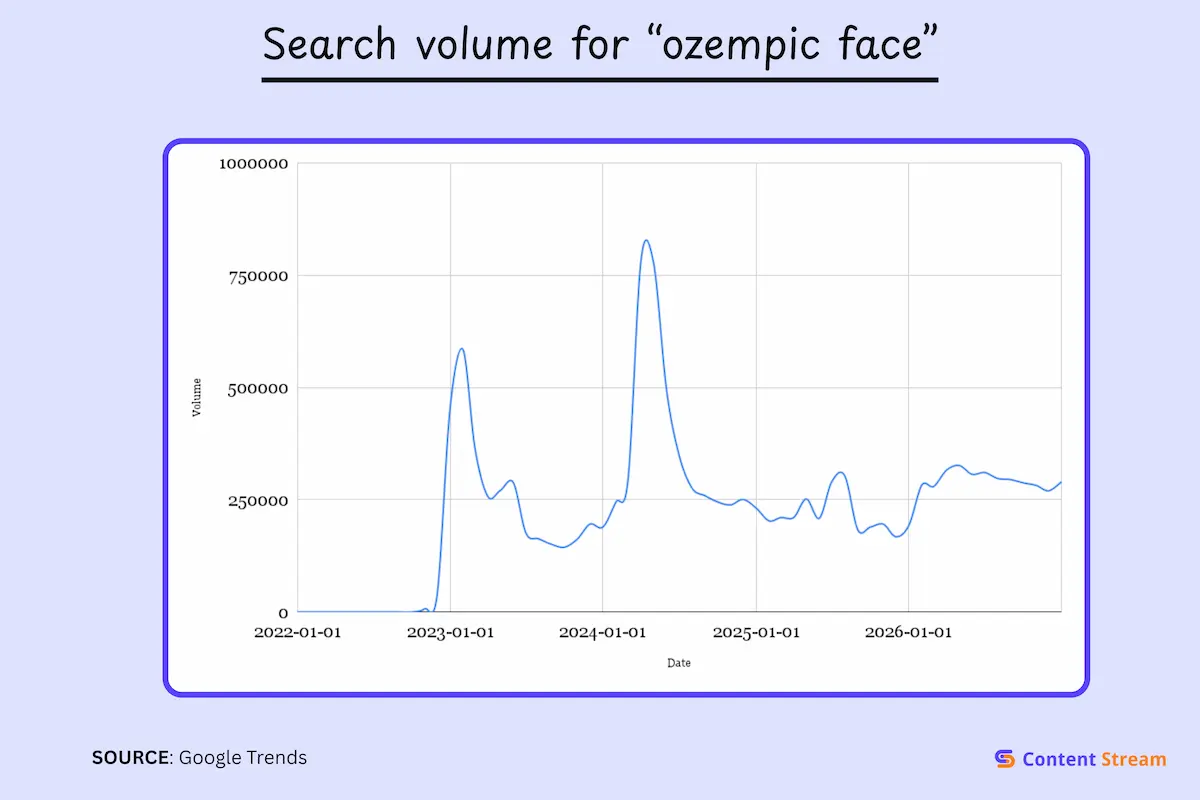
Interest in “Ozempic face” surged by over 10,000% percent in search volume according to Ahrefs data during the same period. As you can see from the chart, it’s petered out a bit, but still much higher than it was, pre-GLP-1 agonist days.
That’s not all; searches around NAD+ supplements also grew over 226 percent, according to the Spate Popularity Index, while NMN queries averaged nearly 98,000 monthly searches, growing 100% YoY.
Now, what does this mean for you? Well, if you run a recovery center and clinic or practices offering patients medical oversight and supplements to complement or even mitigate the side effects of GLP-1 agonists, SEO could funnel a good chunk of this traffic into your leads funnel. So we have written this to show you how to show up when people search for GLP-1 related terms that tie in to your centre’s offer.
You should also check out our dedicated pages on the essentials of SEO for Wellness Brands and for Supplement Brands.
We are not medical professionals and can’t speak about the drug or accompanying supplements. But, we understand search intent and organic rankings. Here’s how we recommend building a strategy to dominate search for these supplements.
Here are the steps you can take to help your website rank for these queries. These aren’t absolute guarantees that you’ll rank if you do these, but you’ll certainly be ahead of centers waiting for patients to find them.
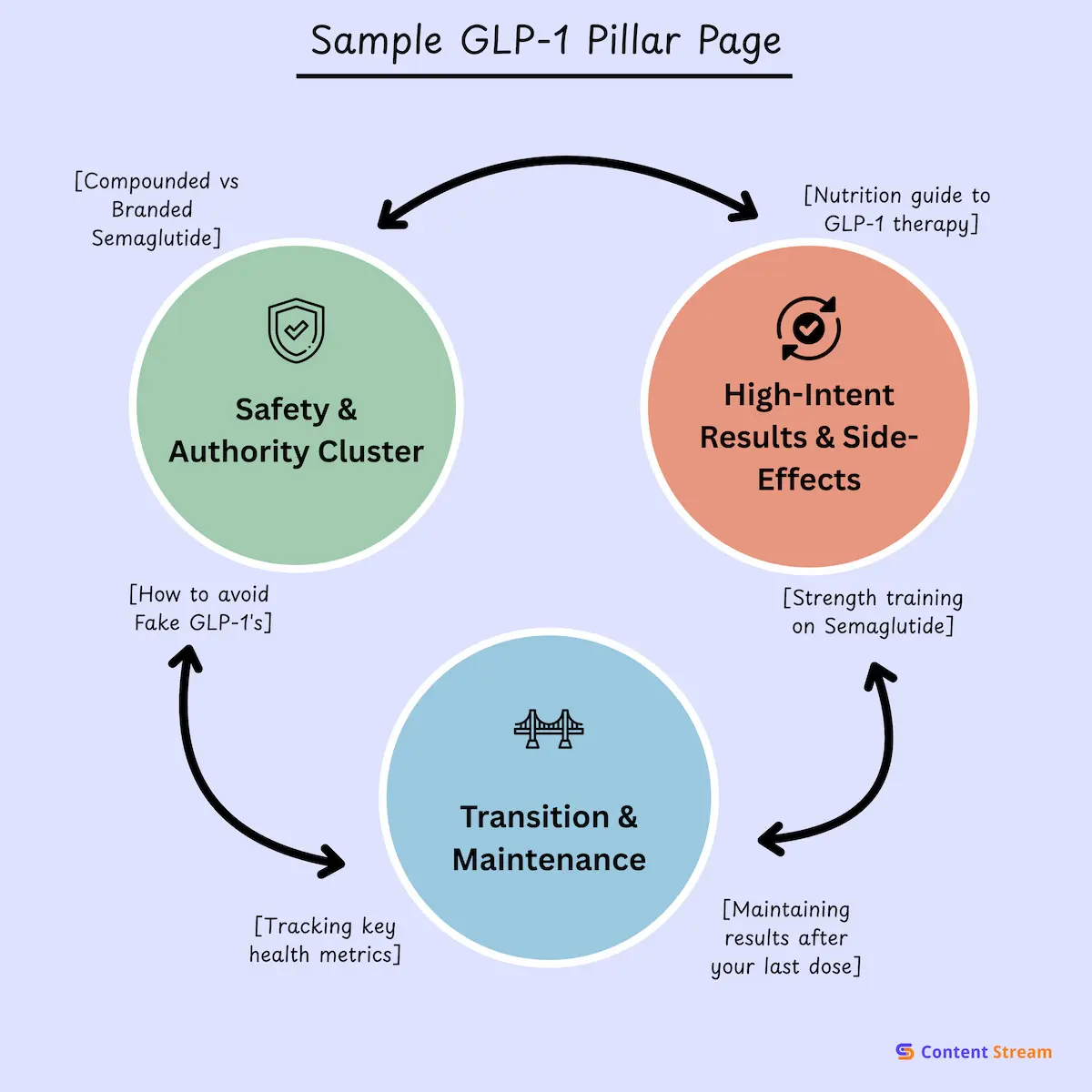
Building topic clusters is an effective way to both organise content and ensure that Google can rank your site appropriately.
Start with a comprehensive pillar page that targets keywords that tie directly into what you do. The keywords should also depend on what you turn up doing keyword research for your fitness business. That could be as simple as “GLP-1 clinics near me” or more specific like “DPP4 and GLP-1 combination.
This page should explain who it is for, what problems it solves and what the programme includes, using the same terminology that clinicians and guidance bodies use.
Then from that pillar, build supporting content around high-intent sub-clusters. Based on what your customers demand and search/keyword trends, those clusters could look like this:
Create articles targeting queries that intersect between what your ideal customers are looking for and what your center offers. That could be:
Since your website falls right in the E-E-A-T framework, it’s critical to back up your claims with proof (medical research, client results) and clearly display author credentials to show that the advice is coming from qualified professionals.
Target searches around what happens when patients stop treatment. Sample content could be:
As always, the actual content will depend on your practice. With content like this, it’s important to link your recommendations to research evidence and create a structured maintenance pathway. The pathway should include support for building healthy habits, continued training and regular follow-up metrics.
Helping your audience avoid harmful counterfeits and compounds can be a helpful addition to your cluster. Not only will it give them actionable information, it will position your brand as an authority, and signal to Google that you’re a source of rounded knowledge.
This could be a plain-language page on counterfeits, compounded products and unregulated supplements.
This cluster approach captures traffic across dozens of specific queries while building the kind of topical authority that Google increasingly rewards across the entire subject area.
Not every searcher is ready to book. So, your content needs to meet patients wherever they are in their journey.
For more on how to address user intent at every stage, read our blog on navigating the messy middle.
Many recovery centers gain valuable leads from local search. You can combine local SEO with content strategy to improve your local visibility.
Here’s how:
Encourage patients who came to you specifically for GLP-1 side effect management to leave reviews mentioning their experience. Keywords in reviews are a huge signal for relevance, for search engines like Google. The more relevant your reviews (and the keywords they contain), the more likely you are to show up.
Read our blog on local SEO tips for your Google Business Profile
Google’s quality standards matter more in health-adjacent categories. Put author credentials on every medical-adjacent page. List clinical reviewers. Include references to primary sources, trial data and clinical guidance. Add a short statement that content is educational and does not replace medical advice.
This is not optional in a category that overlaps with obesity treatment and medication decisions.
Technical SEO, like schema for fitness businesses, compliments your website’s content and overall authority. It won’t boost your rankings, but it can hurt them.
Also, make sure your pages load quickly enough otherwise users will bounce. More than half of health-related searches happen on mobile. Compress images, minimize render-blocking resources and keep load times under three seconds.
Read our blog on website optimizations for your fitness business for even more improvement suggestions
The GLP-1 medication market is projected to exceed $100 billion by 2030. Topical authority takes time to build. Backlinks take time to earn. Domain trust takes time to establish. Every month you wait is a month your competitors spend strengthening their position.
The search demand is already here. The patients are already looking. Let’s make sure it’s your center they find.
Our free SEO audit will identify key areas to optimize your website and improve your rankings, helping you capture the traffic that’s already searching for your services.

I’m Matthew, a personal trainer turned SEO who’s worked with brands like Gymfluencers, Sailo, ClickCease, and Fraud Blocker. These days, I help small to medium sized companies grow their reach with smart, search-focused content.
