The Ultimate SEO Guide for Gyms in 2026
Optimising gym websites for SEO has slowly changed over the past few years, as the attention has rapidly shuffled between content rankings, overall visibility, and brand power. Granted, the fundamentals haven’t changed, as page one is still the most valuable position to be. Google’s top 3 organic results still capture about 54% of all clicks, after all.
But, the stakes are higher, and brands have to do more to get the same level of visibility. For a gym with one location, optimisation means making sure your website answers the questions potential members are actually searching for and gives them a reason to choose you.
For gym chains, the story is a bit different, as every page does the talking for you.
In this guide, we’ll cover what’s changed with gym SEO in today’s world of zero-click search and the existing opportunities for brands.
From building a keyword strategy and creating useful content to optimising location pages and strengthening your presence beyond your own website, we’ll cover it all.
Visibility across search engines and AI systems is critical for every gym. Showing up in search results is proof that your on-page SEO is yielding results and at the same time makes it easier for potential customers to find you. But it goes beyond fixing what’s on your website.
The problem is that multi-location gyms don’t automatically have strong local visibility. Each gym operates in a different market and is competing with different businesses. Therefore, it needs to establish its relevance to the people searching in that area.
While on-page SEO is critical, there are other factors that come into play when building your gym’s visibility. They include the following.
A gym that launched last year is unlikely to have accumulated as many links, branded searches and other signals as a gym that has spent years building its online presence. Unless, of course it has a lot of influencer power behind it. More on that below.
SEO improvements are cumulative, so established gyms can have an advantage that a newer competitor can’t immediately replicate through website optimisation alone.
While your on-page SEO is crucial, what happens “outside” your website matters too.
A gym with a wider online presence, mentioned on social media and fitness communities, can’t be compared to one whose visibility begins and ends with their domain. How a brand is perceived online depends on PR coverage, partnerships and reviews, which further contributes to its visibility.
If you own a multi-location gym, this can be more complicated, as each location has its local audience, links and opportunities for mentions. If your brand has gained national or international recognition, it has a substantial advantage because every location will share in that uplift. However, you still need to support each location’s visibility by focusing on individual markets.
Multi-location gyms have more opportunities to work with than independent gyms. However, they still need a sound approach. Links and mentions from local websites and community events can help establish that a gym is a part of the community it serves.
While the factors we discuss above are important to have, they don’t rule out on-page SEO. Your website still has to be clear on why people should choose your gym, where it is located and what each location offers (for multi-location gyms).
Where possible, location pages should provide useful information alongside relevant details that need to be consistent across the brand.
That does not mean every location needs an entirely different website. In fact, most gym chains just create multiple pages for each location on the same parent domain. For each of these, you want to add details to each page like:
A strong keyword strategy starts with understanding what your potential members are searching for, why they are searching for it and how those searches relate to your services. Searches like “gym near me” and “[brand] in [city]” are important because they capture your target audience. But, they only one part of the search opportunity.
So many other people are searching for specific fitness questions and training methods that “gym near me” may not answer. These searches can introduce your brand to someone long before they decide which gym to join.
This is an opportunity for you to optimise your content for AI systems and search engines. For example,
Many large gym brands already publish exercise guides, recipes, and workout programmes. This may help in establishing topical relevance, but it doesn’t automatically mean high search volume.
Keyword research helps solve both problems. Before committing resources to a piece of content, consider:
Our Gym & Fitness Keyword list provides a useful starting point for identifying opportunities across different types of fitness searches. The examples we share below are an excerpt of a larger list and are only included as samples. Always check search volumes, competition and relevance against your business before publishing content.
| Category | Example keywords | KD / Volume | Potential content use |
|---|---|---|---|
| Workout routines | "4 day workout plan," "hypertrophy workout plan," "30 day ab workout" | KD 1, ~500 vol | Workout guides, programmes and trainer-led resources |
| Time-based workouts | "30 minute workout," "20 minute dumbbell workout," "10 minute leg workout" | KD 1, ~350–500 vol | Written routines and supporting video content |
| Specific training styles | "calisthenics workout no equipment," "resistance training vs strength training," "21s workout" | KD 1, ~500 vol | Explainers, training guides and comparisons |
| Equipment & setup | "stationary bike cardio," home gym setup queries | KD 1–4, ~400–450 vol | Equipment guides and educational content |
| Local intent | "gym near me," "24-hour gym near me," "[brand] in [city]" | Higher KD | Location pages and local landing pages |
| Gym business & careers | "how to open a gym," salary and career queries | Long-form | Industry content, thought leadership and franchise-related content |
For more tips on how to optimise your website, see our technical optimisation guide
Many people are turning to AI tools to help them quickly find answers to questions. For gyms, this might look like asking AI the best strength training exercises for a specific goal or how long it takes to recover from intense training.
How you structure your content for these queries determines if you get cited or not. A large part of AI comes down to how your content is structured. Clear, usable content that’s written for both humans and AI systems to understand is the winning formula.
Similarly, your technical layer is as important. Schema markup helps search engines understand key information about your gym and its individual locations. This will include details such as opening hours, address and facilities. With schema markup, it’s easier for search engines to interpret and display your business information accurately.
Our schema markup guide for fitness brands covers how to apply schema across your gym locations.
To earn citations at this scale,
Off-site visibility helps strengthen your gym’s presence beyond its own website. Mentions and links from local publications, community organisations, and fitness websites can reinforce your gym’s connection to its market and help build authority. For multi-location gyms, these opportunities can also support the visibility of individual locations.
According to Google, local rankings depend on relevance, distance and prominence, with the latter covering how well known your site is.
Off-site signals can come from:
Influencer partnerships also come in handy here, especially when they’re doing more than a sponsored post. Earlier in the year, Workout Anytime partnered with viral baseball creator Kyle “KJ” Jackson to create club-level storytelling and member experiences.
Similarly, The Yard Gym’s 2026 partnership with Nike Training, which named The Yard its first global gym partner, created training experiences and community events.
These examples show how fitness brands can use partnerships to generate activity and mentions beyond their own websites, contributing to their overall visibility.
Some gyms become well known long before people ever visit their website. The gym’s reputation shapes its visibility and how people talk about it.
For over a decade, Planet Fitness has built a reputation as the judgement-free zone, with a literal “Lunk Alarm” going off to eject members for grunting or dropping weights too loudly. The policy generated backlash from the bodybuilding community after a controversial 2011 ad campaign mocking serious lifters as lunks.
But over the years, the policy has also functioned as a durable brand identity, proving that a controversial policy can cut in more than one direction depending on the audience.
Like being a judgement-free zone, Planet Fitness has also built years of positive press by opening its doors during natural disasters, with no membership required. Just recently, Planet Fitness offered free showers to Hawaii Hurricane Lala victims, member or not.
A gym looking out for its members, especially the ones who aren’t even paying for it, tends to earn the kind of coverage no SEO tactic can manufacture on its own.
A moment like this gives the gym,
Influencer partnerships can give a new or established gym access to an audience it might not otherwise reach. On the other hand, influencer-owned gyms start with an audience that already knows the person and the brand around them.
This is where influencer ownership differs from a standard influencer partnership. Our supplement brand seo report showed that brands with a strong off-site presence, social following, influencer backing, generated up to 9.8x more traffic per page than their peers, and up to 34x more than brands publishing a similar volume of content.
Influencer-owned gyms enjoy the visibility that does not necessarily depend on having a sophisticated content strategy. Below are some of the top influencer-owned gyms:
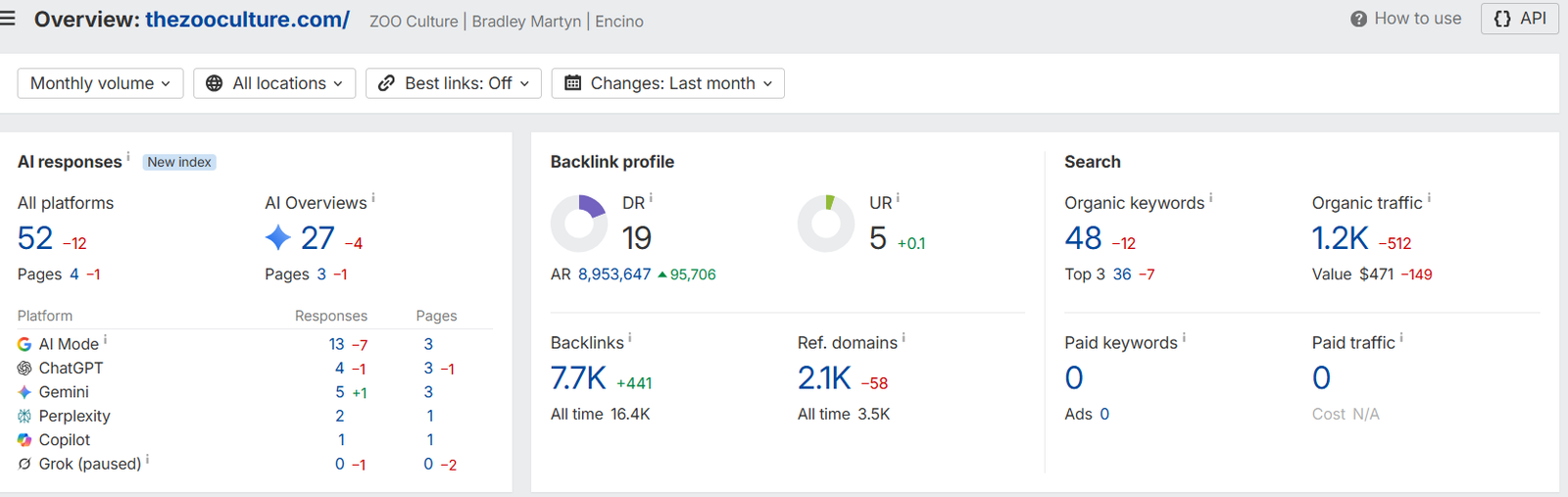
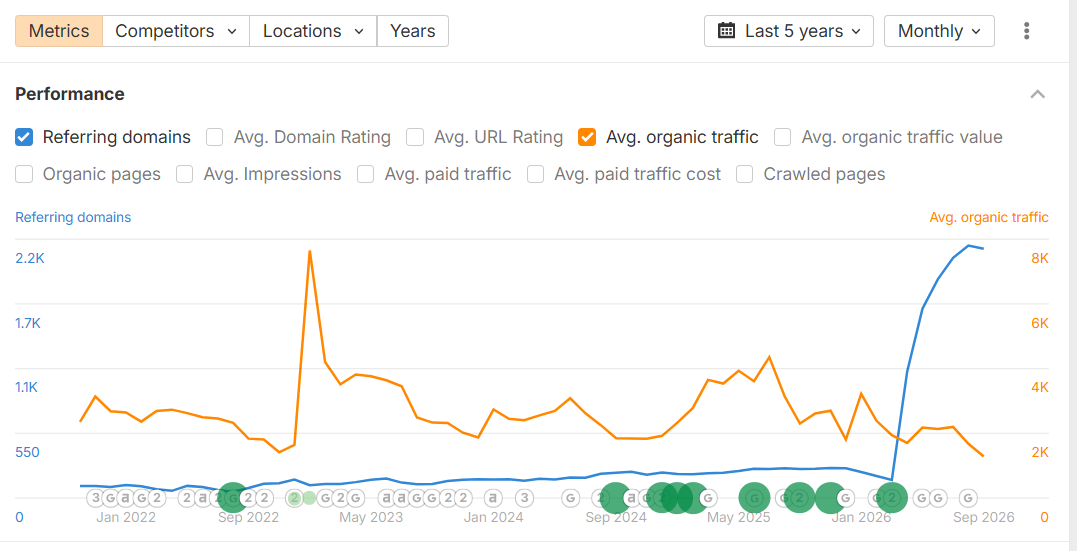
Bradley Martyn’s Zoo Culture shows how an influencer-owned gym can build significant online visibility around an existing personal brand. Founded in 2015, the Encino-based gym’s website has a Domain Rating of 19 with a steadily growing volume of organic traffic.
Much of Zoo Culture’s traffic is branded from people searching “zoo culture” or “bradley martyn gym” by name. It also shows up in 51 AI-generated responses across the platforms we tracked, including 26 Google AI Overviews.
By the time Zoo Culture was launched, Martyn had already built a large YouTube and social media following, and the gym became part of the content he produced. Other creators and athletes also train and film at Zoo Culture, bringing the gym into videos and social posts that reach audiences beyond its own channels.
This suggests that much of Zoo Culture’s search visibility is tied to existing brand demand rather than a large library of SEO-focused content. Martyn’s existing audience, branded searches, media coverage, backlinks and social presence create demand around the gym itself.
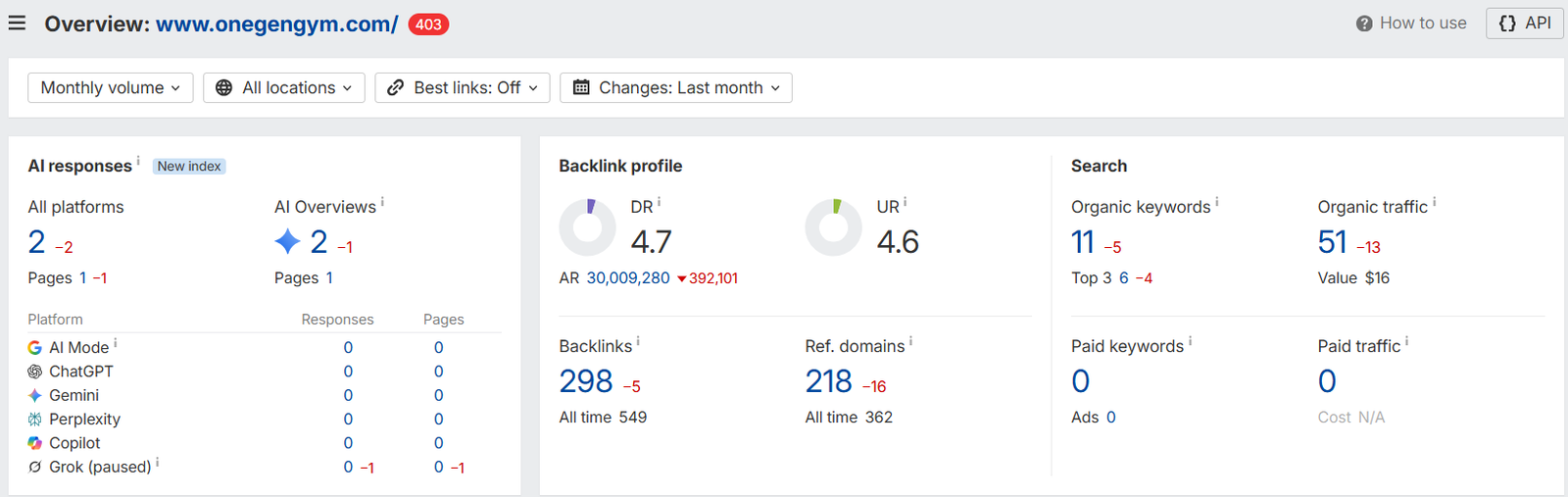
Another example of influencer-owned gyms is Larry Wheels’ One Gen Gym. The gym was built around Wheels and coach Ryan Bentson, with Wheels’ personal brand forming a significant part of its identity. According to Ahrefs data, the site has a Domain Rating of just 4.7 and only 10 tracked organic keywords.
Wheels built his audience through powerlifting content but having millions of followers didn’t automatically translate into search visibility the way it did for Zoo Culture. 97.1% of the site’s traffic is on the homepage via branded terms like “claremont gym” and “larry wheels gym.” Also, several of the site’s own pages, including sign-in, cold plunge, and contact, have lost their rankings entirely and now bring in no traffic at all.
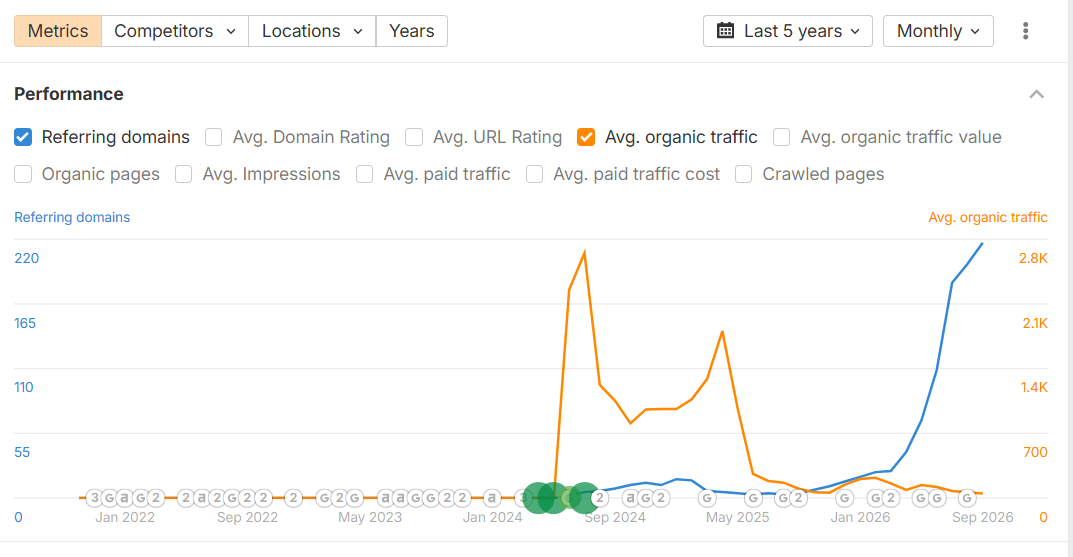
Iron Addicts, is a gym brand associated with C.T. Fletcher. Fletcher opened the original Signal Hill gym in the mid-2010s, and the brand built a strong reputation within the hardcore fitness community. Our Ahrefs data, however, shows a much smaller independent search presence: a Domain Rating of 9 and 10 tracked organic keywords.
According to Ahrefs, nearly all of the site’s organic visibility is on one page. The /the-gym/ page gets 100% of the estimated organic traffic and ranks for the branded terms “iron addicts gym” and “iron addicts” at #1 and #3 respectively.
The data suggests that although Iron Addicts has an established name within the fitness community, that recognition hasn’t translated into a broad or consistent organic search presence.
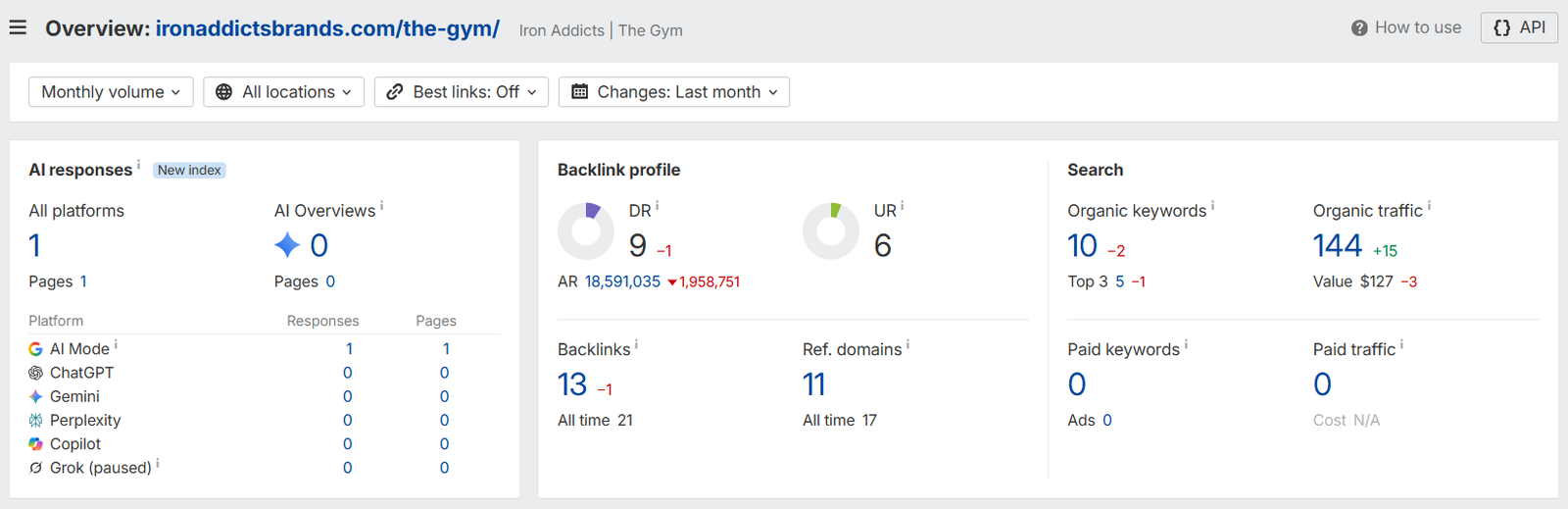
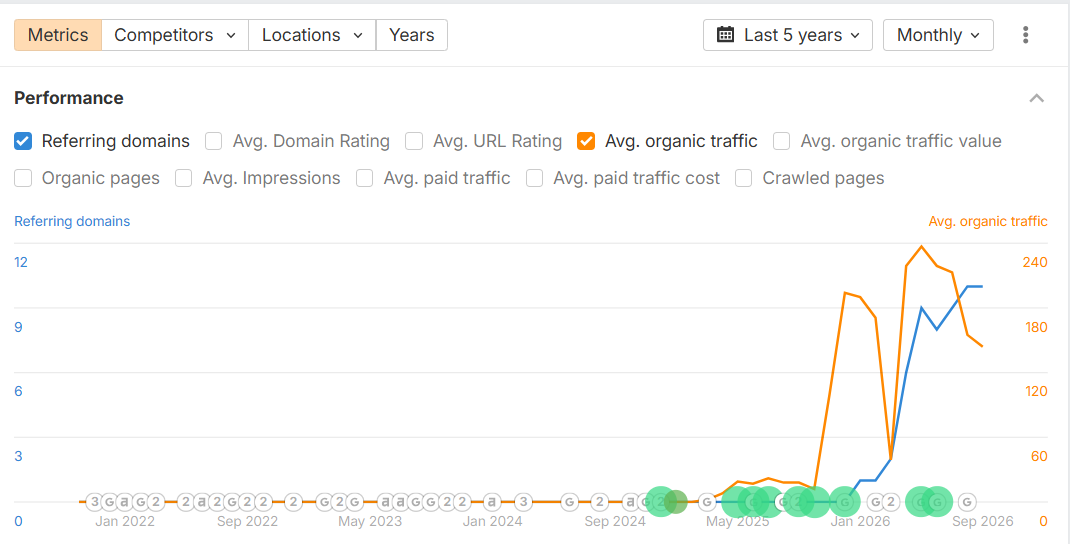
These examples suggest that being closely associated with a well-known fitness personality doesn’t, by itself, determine how much authority the gym’s own website builds.
The takeaway isn’t that influencer-owned gyms work better or worse than influencer partnerships. They offer different advantages.
While influence can accelerate awareness, gyms still need to build their own visibility through their website, Google Business Profile, and the other signals that establish what the business is and where it operates.
There is no fixed timeline for gym SEO. The timeline depends on how competitive the market is, where your gym is starting from and how quickly it can execute the required work to build visibility.
For a small independent gym, this can take up to several months or longer especially if they’re starting from scratch. They have to build the website, regularly publish useful content, earn local visibility and gradually build recognition. However, not every gym starts from the same position.
Influencer-owned gyms can enter the market with an existing audience and online presence around the person behind the business. As the examples above suggest, that can create search demand and visibility. Likewise, influencer partnerships can also give an independent gym access to an established audience without requiring the influencer to own the business.
The situation can have a different look when an established brand opens a new location. They’re not necessarily starting from scratch like independent gyms because the parent brand may already have branded searches, backlinks and an established website.
That advantage, however, doesn’t mean every branch they open will rank immediately. Each branch still has to establish relevance in its local market, compete with existing gyms and provide useful, location-specific information. The gym’s local presence and competition in the market as well as their location page’s strength will determine their visibility.
Building visibility as a gym can look very different depending on the operation and starting position. Regardless, whether you’re just starting out as an independent gym or you’re an established chain, SEO fundamentals remain unchanged. Creating relevant and useful content, building authority beyond your website and strengthening local visibility are some core SEO practices you can utilise.
What differentiates how visibility is built amongst gyms is how quickly they can put these strategies into action. For multi-location gyms, the opportunity is to use the scale you already have without sacrificing the local relevance that makes each location competitive.
If you’re unsure where your gym currently stands or what should come next, book a free consultation. We can look at your current search visibility, identify the biggest opportunities and help you build an SEO strategy around your goals.
These are the questions that come up most for gym chains managing SEO across multiple locations :
Yes. Each location should have a dedicated page with information specific to it and its locality. Consolidating locations into a single page or publishing thin, near-identical pages makes it harder to establish a strong local presence for each market.
Give every location clear standards for tone, responses and escalation, while allowing franchisees to manage their own day-to-day accounts. This keeps the brand consistent without controlling every post.
Both. Corporate should create the shared content library and standards, while individual locations add genuinely local information and context. This gives the brand consistency without turning every location page into a generic copy of the last one.
Not entirely. You don’t need a separate AI SEO strategy. Rather, focus on building useful, authoritative content and strong local visibility across the entire network.

I’m Raechelle, a content writer and editor specializing in SEO and health content. With over six years of experience, I help brands turn complex health topics into clear, well-optimized content that ranks.
